

Month: February 2026

TBRI® Partnering with Parents

For years, ACH Child and Family Services has relied on Trust-Based Relational Intervention® (TBRI) to build trust and connection with vulnerable children. For more than a year, ACH has also offered TBRI  Partnering with Parents to families in the child welfare system. This service provides TBRI training that is tailored for parents and caregivers, so they can  build a strong  family connection through empathy and understanding.
TBRI was developed by and is the
signature therapeutic model of
Texas Christian University’s
Karyn Purvis Institute of Child Development.

These are stories of three graduates of the certification program.
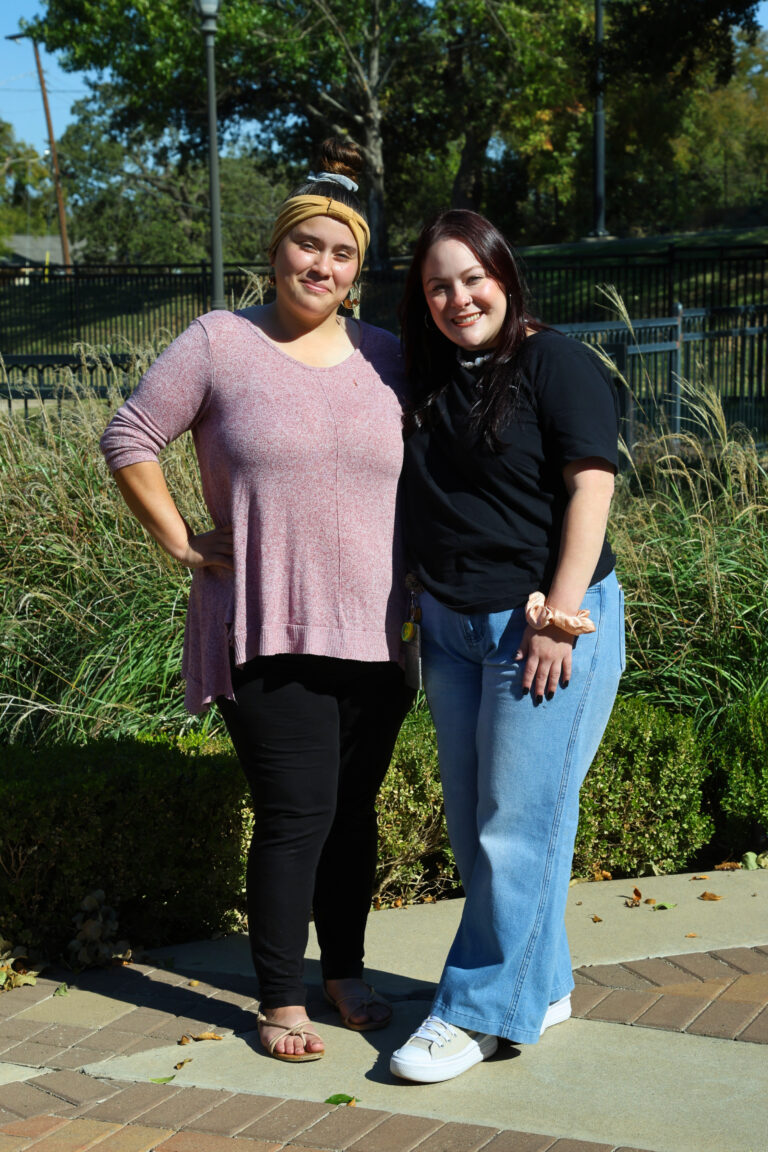
Alyssa and Malee

Healing through connection: A mother’s journey with TBRI®

What follows is a heartfelt letter from Alyssa G. to ACH TBRI Parent Educator Malee Sims. Alyssa is a mother who has experienced the transformative power of TBRI after reuniting with her foster children. Her story is a testament to the resilience and strength of families who face challenges head-on and emerge stronger together. Malee says she is honored to have trained Alyssa in the TBRI Partnering with Parents certification program.   

Leading and witnessing a mother’s transformation

ACH TBRI Parent Educator Malee Sims describes a success story with Nakeia H., a recent TBRI Partnering with Parents graduate. Nakeia didn’t want to tell her son “no” until she reflected on her on her past, her own mother’s discipline troubles, and what happens when you fail to take control.

Yet More Praise from a TBRI Partnering with Parents graduate

When I first met Malee, I was pregnant and my emotions were all over the place. I honestly didn’t know what to expect and was afraid I might be judged. But the moment I opened up, she welcomed me with so much understanding and kindness. She introduced me to TBRI®, which focuses on helping children who come from hard places and the need to feel safe and understood.

“I’ve learned to stay calm, to connect, and to guide them with love and patience.”

-- Daijahne

What meant the most to me was how the things I learned not only helped my kids, but it helped me too. I began to see their behaviors differently not as defiance, but as communication. They’re still learning how to express themselves, and sometimes it comes out in ways that are hard. But with the tools Malee gave me, I’ve learned to stay calm, to connect, and to guide them with love and patience.

Since working with Malee, my son has hardly been in timeout. We understand each other so much better now. I’m so grateful for her guidance — it’s truly changed our home. I know that when they fully come home, we’re going to have a lot of amazing things to learn about each other.

— Daijahne H.

While this program is for families in the child welfare system, ACH also offers youth and family counseling at no charge.

Find out more here or call 817.335.HOPE (4673).

Leading and Witnessing a Mother’s Transformation

ACH Child and Family Services utilizes Trust-Based Relational Intervention® (TBRI®) to build trust and connection with vulnerable children. TBRI is so effective, ACH also trains parents in the child welfare system so that the family benefits as a whole. Here, ACH TBRI Parent Educator Malee Sims describes a success story with Nakeia H., a recent TBRI Parenting Partnership “graduate.”

A difficult first impression…

Nakeia couldn’t understand her 13-year old son’s, aggressive, explosive, unpredictable behavior. In fact, Julian’s behavior was responsible for their evictions from several apartments.  She knew she needed help and that’s why she decided to enter joint managing conservatorship with Child Protective Services.

“When I met him, he lacked the skills needed to effectively communicate what it is that he needs,” says Malee. “He resorted to attempting to communicate through his behaviors but was almost always misunderstood. He was suffering from being constantly frustrated.”

“On the other hand, initially connecting with Nakeia was difficult because she was resistant to the techniques of the training,” says Malee. “She didn’t want to accept alternatives to saying ‘no.’”

“TBRI is an evidence-based intervention model. It’s not about gentle parenting or being a millennial parent.”

Malee Sims
ACH TBRI Parent Educator

Looking back, Nakeia agrees.

“If I could do my first two meetings over again, I would,” she says. “I came in hot. I came in with an attitude. I came in with the mindset of ‘No one can tell me anything that I don’t already know about a child that I’ve been raising on my own for all his life . . .no parent is perfect.’”

…with nowhere to turn

At one point during the open case (which was officially closed in August), Julian returned home, with his behaviors still being a problem. However, this time she had little support from the child welfare system. Because Nakeia still did not feel equipped to manage Julian’s behavior, the first return home failed and Julian wound up back in various RTC’s and behavioral hospitals.

Ayden returned home again during the time Nakeia was working with Malee at ACH. This time, Nakeia was living in her car because of her record of Julian-related evictions. To make matters worse, Julian was on probation in the juvenile justice system. No apartment would accept them, so they moved in with Nakeia’s mother.

Unfortunately, Nakeia’s mother was really hard on Julian. She failed to recognize he was just trying to adjust to being back home. The grandmother had zero tolerance for what Malee describes as “normal” teenage behaviors. Malee told Nakeia that the issue wasn’t as much about Julian’s behavior as it was her mother’s. And, by not taking control, she may have actually contributed to their situation.

A lightbulb moment turns into a brighter future

In TBRI Caregiver meetings with Malee, Nakeia learned that parenting is perfect maybe 30% of the time at most. The rest of the time is considered rupture and repair, which is how you learn and grow. In this “scaffolding” process, you learn where you are at and then move on.

“TBRI is an evidence-based intervention model. It’s not about gentle parenting or being a millennial parent,” says Malee.

When Nakeia saw the light, she decided it was best to distance herself and her son from her mother by moving into an extended stay hotel. At the same time, she grew to understand more about Adverse Childhood Experiences (ACEs) and began practicing a technique called Connecting, Empowering, and Correcting.

“I thought I knew it all, and I thought wrong,” says Nakeia. “I learned a lot from TBRI about not only my child, but about myself as well. If I can give anyone one bit of advice to take with you when you go down this journey, it would be that it’s okay to listen, and it’s okay to learn. To trust the process, but most importantly, listen.”

Nakeia and Julian have since been accepted to a housing program, and things are really looking up for them. Julian is on the football team, and for the first time—enthusiastic about school. There are still challenges to overcome, but their future is looking much more promising.

While this program is for families in the child welfare system (CPS), ACH also offers youth and family counseling at no charge.

Find out more here or call 817.335.HOPE (4673).

TBRI was developed by and is the signature therapeutic model of
Texas Christian University’s
Karyn Purvis Institute of Child Development.