
Category: Programs

Walking Alongside a Kinship Family

When unexpected loss reshaped her family overnight, one aunt found guidance, resources, and reassurance through ACH’s Kinship Navigator program.

About a year ago, Ana a mother of four children, stepped into a caregiving role no one ever plans for. Overnight, Ana took in three nieces and nephews after the children’s mother suddenly passed away. In an instant, her household suddenly grew, bringing with it more responsibility, higher expenses, and deep grief.

“It all hit at once,” Ana shared. “I didn’t always know what to do or what was coming next.”

Ana became a kinship caregiver outside of the foster care system and without a CPS case. Families in these situations often face the same challenges as foster families, but with fewer formal support.

Case In Point

A school counselor called about concerns with one of the children in Ana’s care. Ana was caught off guard and wasn’t sure what it meant or what she was supposed to do next. Everything felt uncertain. Not long after, she connected with a Kinship Navigator at ACH Child and Family Services, who helped bring clarity during an overwhelming moment.

That conversation changed everything.

Navigators walk alongside caregivers, helping them understand their options, and connecting them to resources during difficult transitions.

Over the past year, the Kinship Navigator worked closely with Ana to create stability for her family. Together, they tackled immediate needs like enrolling the children in Medicaid and SNAP, applying for programs that offered the children new beds, and securing everyday necessities such as diapers, pajamas, toiletries, and school supplies.

Support Beyond the Basics

ACH’s Kinship Navigator also helped connect the family to affordable haircuts through a community partnership and invited them to attend ACH’s Back-to-School event, to receive free school supplies, and holiday events, such as Christmas and Halloween celebrations, for free, festive fun.

Those moments mattered. “Every time I told the kids we were going to an ACH event, they got so excited,” Ana said. “With a lot of kids, it’s hard and expensive to do family outings. These experiences meant so much to them.”

One favorite memory was an expenses-paid family day trip to Fossil Rim, a bright, joyful moment during an otherwise heavy season.

Prioritizing Emotional Support

The children had experienced the loss of their mother, and their fathers were not in the picture. Some of the children participated in skill-building classes, while others began counseling services through community partners. Ana and her spouse even attended couples’ counseling, something she later described as unexpectedly helpful amid the stress and change.

ACH also helped address one of the biggest hurdles Ana faced: legal support.

As Ana and her husband move forward with adoption, ACH provided assistance toward legal fees, easing a significant financial burden. What once felt overwhelming became manageable — one step at a time.

Building a Stronger Future Together

Reflecting on Ana’s journey, our Kinship Navigator shared, “She has been such a wonderful caregiver to work with. She is resilient and persevering, and she always wanted to do everything she could for the children in her care. As she transitions out of the program, it is bittersweet. I am incredibly proud of everything she has accomplished, even as we prepare to say goodbye.”

For Ana, the greatest impact of Kinship Navigator was not feeling alone. “It’s an amazing program,” she said. “There are so many resources, and you don’t feel like everything is falling apart because you finally know what comes next.”

Ana’s story reflects the heart of Kinship Navigator — meeting families where they are, walking alongside them through uncertainty, and helping them build a stronger future together.

About Kinship Navigator

ACH’s Kinship Navigator program serves families outside the child welfare system who are caring for a relative’s children. The program offers outreach, education, and hands-on support, connecting caregivers to essential resources such as food, clothing, medical care, school support, and legal aid.

Many kinship caregivers step in during a crisis with little preparation or guidance. Kinship Navigator walks alongside these families, providing stability, emotional support, and help navigating complex systems. By empowering caregivers and connecting them to a supportive community, the program helps children remain in safe, familiar homes with the love of extended family — preventing entry into the foster care system.

Learning Structure, Building Stability

At 16, he was at risk of losing his footing at school and home — until a two-week intervention changed his trajectory.

For Darin*, school had become a source of constant conflict. At 16, he was smart and capable, but without consistent routines and support, those strengths often showed up as frustration, poor choices, and strained trust at home. Disruptions at school and increasing tension with his foster parents made it clear he needed more support than discipline alone could provide.

That’s when his family turned to Turning Point, a two-week program from ACH Child and Family Services designed to help foster families avoid placement disruption.

Creating Structure, One Day at a Time

From the start, Darin’s days at Turning Point were structured and intentional. Clear routines helped him rebuild habits he would need both at home and at school, such as getting up on time, practicing personal hygiene, organizing his space, and following daily expectations.

“A lot of our kids haven’t had structure in a long time,” said Jean‑Michele De Goede, program supervisor at Turning Point. “Once they feel safe and know what to expect, you really start to see them settle in.”

Education was a central focus. Group sessions emphasized accountability, decision-making, and managing impulses, skills that directly translate to the classroom. Darin also participated in activities that strengthened problem-solving and self-reflection, helping him understand how his choices could affect his future.

Family Forward

Family involvement played a key role in his progress. Through visits and family sessions, Darin’s foster mother stayed engaged, reinforcing new routines and expectations he would carry home.

“Turning Point helps families get through a stressful situation, but it’s critical the whole family stays involved in our work so changes actually stick when kids return home,” explains Jean-Michele.

By the time Darin prepared to leave Turning Point, he had gained more than short-term stability. He left with practical skills, renewed confidence, and a clearer path forward, ready to re-engage with school and rebuild trust at home.

*Name and likeness changed for privacy purposes.

About Turning Point

Turning Point is a short-term crisis intervention and stabilization program for youth in foster care ages 10 to 17. Designed as a safe, home-like alternative to hospitalization, the program helps youth and families navigate moments of crisis while preventing placement disruptions.

Turning Point offers intensive mental health support, including psychiatric services, individual and group therapy, and structured daily routines that promote stability and healthy coping skills. Family involvement is central to the program, with counseling and personalized support focused on strengthening relationships and supporting successful reunification. The program is available to foster families throughout Texas.

Finding Healing Through Intercept®

He learned what it felt like to lose everything familiar — his home, his sense of safety, and the certainty that his mom would always be there.

What he hadn’t learned yet was that healing is possible when the right support steps in.

At just seven years old, Diego* has already experienced more instability than many adults face in a lifetime. After being removed from his home due to his mother’s mental health crisis, he spent time in foster care while his family worked toward reunification. During that time, the separation was deeply frightening for him. He worried constantly about whether he would be able to go home again, struggled with anxiety about being taken away, and was easily overwhelmed by loud noises and unfamiliar environments. His restless energy made it difficult to settle into routines at the foster home.

Diego’s mother, who lives with bipolar disorder, PTSD, anxiety, and depression, worked hard while he was in foster care to stabilize her mental health and reunify with her son. The Intercept team began working with the family in the weeks leading up to reunification and continued supporting them as Diego returned home, helping ensure the transition was safe, stable, and successful.

Even after reunification, Diego’s mother remained committed to her mental health and to building on the progress she had made. She understood that recovery is an ongoing process, not a single milestone. But with reunification came new stress and responsibility, and she needed specialized, intensive support to sustain her progress and strengthen her family’s stability during this critical time.

She was committed to getting better for her son — but recovery rarely follows a straight line.

With the support of a permanency worker at OCOK, she engaged in comprehensive services over 12–18 months and made significant progress. At the point of reunification, the complexity and intensity of her needs — common in cases involving mental health, addiction, and other high‑risk factors — necessitated referral to a program to help sustain change and reduce the risk of children returning to foster care.

That’s where Intercept® came in.

Restoring Safety

Intercept® specialists walk alongside families during their most vulnerable moments, helping them strengthen relationships, restore safety, and develop tools to thrive together. With Diego’s family, our focus was on building trust, consistency, and structure — the cornerstones of trauma-informed care.

Through multiple weekly visits and coaching, our Intercept® Specialist, Alesia Burciaga, worked with Diego’s mother to create predictable routines, manage her mental health needs, and learn positive parenting strategies. We helped her coordinate with medical providers to stabilize her medications and guided her in using grounding techniques when anxiety began to spiral. For Diego, we introduced calming strategies, social skill-building activities, and ways to express big feelings safely.

Slowly, the home began to feel different. Diego began sleeping through the night. His mother communicated openly with her treatment team and became more confident in her parenting. The constant fear of another removal began to fade, replaced by connection, laughter, and hope.

Through Intercept®, a program of Youth Villages, ACH helps reunite foster children with their families.

Building a Safer, Steadier Home

After several months, the family’s case closed as a positive discharge. While their journey continues, Diego and his mother now have the tools and support network they need to move forward — together.

Intercept® continues to stand out as a groundbreaking approach to family preservation — one that meets families where they are, honors their resilience, and helps them heal from trauma with compassion and evidence-based care. It’s not just a program; it’s a lifeline for families like Diego’s, proving that with the right support, change — and healing — are always possible.

*Name and likeness changed for privacy purposes.

A blue paintbrush line graphic.

About Intercept®

Intercept® is a trauma-informed approach that offers a variety of evidenced-based and research-informed practices that meet the individualized needs of the family and child. The Intercept® model includes a systemic therapeutic approach to parenting skills education, school interventions, development of positive peer groups, and extensive help for families and children in accessing community resources and long-term, ongoing support.

The intensity of services is highly successful in helping families achieve and maintain stability so that children can remain in the home and avoid continued interactions with the court, child welfare, juvenile justice, and mental health systems.

The Youth Intercept Intercept program has helped tens of thousands of youth and families in 20 states since 2006.

From Panhandling to Stability

Panhandling

They had no school or structure, only survival, until ACH stepped in.

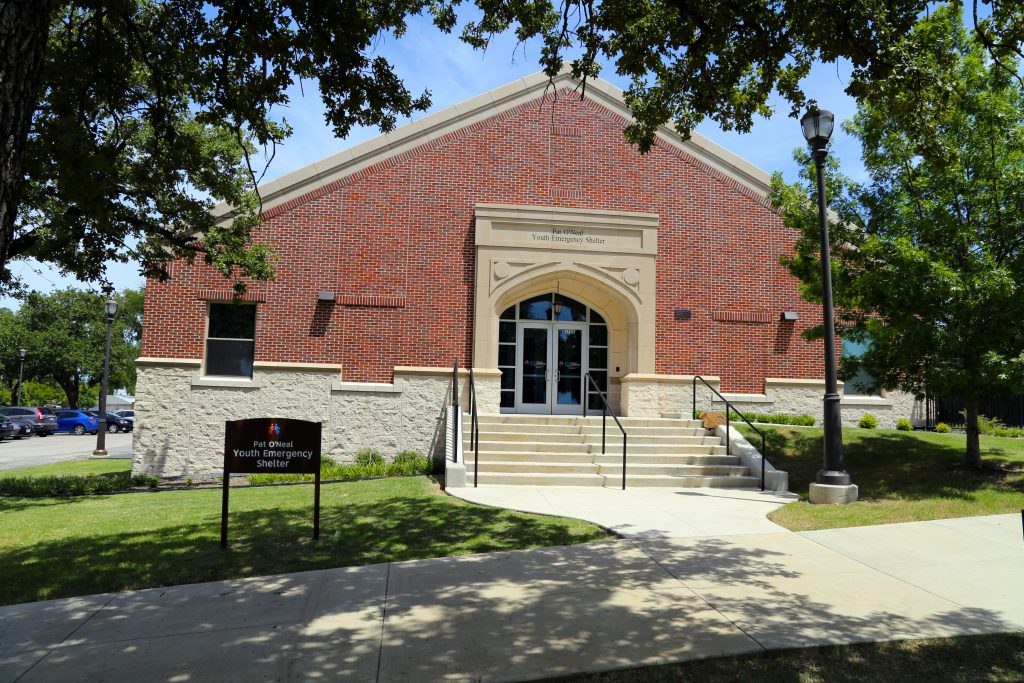
Lucas*, 16, and his siblings Isabella*, 17, and Dylan*, 15, were removed from their parents after they were found panhandling around Fort Worth. Their parents sent them out daily to ask for money.  For the children, there was no school, no structure, just survival. When Child Protective Services stepped in, the siblings were placed in the Pat O’ Neal Youth Emergency Shelter, one of ACH Child and Family Services 15 programs that serves children and families in North Texas.

Breaking Barriers

The challenges were clear from the beginning. The children refused to speak English and had no school records or history of formal education. The shelter’s team used the Trauma-Informed, Relationship-Based® approach (TBRI) to build trust, knowing the kids had every reason to be wary of adults.

At first, staff believed the children spoke Romanian. It turned out they spoke three languages, including Spanish and English. With a Spanish-speaking translator, communication became easier, and the kids slowly began to engage.

To help them feel more at home, ACH worked with CPS and the children’s mother so that she could cook traditional Romanian meals and have them delivered to the Shelter. This small act made a big impact. It gave them a sense of comfort and connection to their culture.

Though they couldn’t return home, ACH prioritized keeping family ties strong. The siblings were given regular visits with their mom, which helped them feel safe and supported.

The Chance to Move Forward

After 90 days, the children were stable and ready for the next step. Their uncle stepped forward as a placement option, and with ACH’s help, the transition went smoothly. The siblings left not in fear, but with trust and hope.

Lucas, Isabella, and Dylan’s story shows how ACH’s mission—to keep families connected whenever safely possible—comes to life through care, patience, and consistent support. What started with crisis ended with a safe placement, and the chance to move forward as a family.

*Names and likeness changed for privacy purposes.

Panhandling

About the Pat O' Neal Youth Emergency Shelter

The Pat O’Neal Youth Emergency Shelter (YES) is the only 24-hour emergency shelter in Tarrant County offering 24/7 safe shelter to runaway and homeless youth, and trafficking survivors, ages 5-17. ACH works to reunite them with their families, or find safe and stable alternative living arrangements. The program provides outreach, education, advocacy, counseling, and case management services for foster care and community youth who are experiencing family crisis, family conflict, or homelessness.

Our 2026 expenses for the Pat O’ Neal Youth Emergency Shelter are greater than our resources and we are projecting a funding gap of $579,366.

If you can help, please consider donating. We appreciate any support, as it helps our community with needed programs and services like the YES.

TBRI® Partnering with Parents

For years, ACH Child and Family Services has relied on Trust-Based Relational Intervention® (TBRI) to build trust and connection with vulnerable children. For more than a year, ACH has also offered TBRI  Partnering with Parents to families in the child welfare system. This service provides TBRI training that is tailored for parents and caregivers, so they can  build a strong  family connection through empathy and understanding.
TBRI was developed by and is the
signature therapeutic model of
Texas Christian University’s
Karyn Purvis Institute of Child Development.

These are stories of three graduates of the certification program.
Alyssa and Malee

Healing through connection: A mother’s journey with TBRI®

What follows is a heartfelt letter from Alyssa G. to ACH TBRI Parent Educator Malee Sims. Alyssa is a mother who has experienced the transformative power of TBRI after reuniting with her foster children. Her story is a testament to the resilience and strength of families who face challenges head-on and emerge stronger together. Malee says she is honored to have trained Alyssa in the TBRI Partnering with Parents certification program.   

Leading and witnessing a mother’s transformation

ACH TBRI Parent Educator Malee Sims describes a success story with Nakeia H., a recent TBRI Partnering with Parents graduate. Nakeia didn’t want to tell her son “no” until she reflected on her on her past, her own mother’s discipline troubles, and what happens when you fail to take control.

Yet More Praise from a TBRI Partnering with Parents graduate

When I first met Malee, I was pregnant and my emotions were all over the place. I honestly didn’t know what to expect and was afraid I might be judged. But the moment I opened up, she welcomed me with so much understanding and kindness. She introduced me to TBRI®, which focuses on helping children who come from hard places and the need to feel safe and understood.

“I’ve learned to stay calm, to connect, and to guide them with love and patience.”

-- Daijahne

What meant the most to me was how the things I learned not only helped my kids, but it helped me too. I began to see their behaviors differently not as defiance, but as communication. They’re still learning how to express themselves, and sometimes it comes out in ways that are hard. But with the tools Malee gave me, I’ve learned to stay calm, to connect, and to guide them with love and patience.

Since working with Malee, my son has hardly been in timeout. We understand each other so much better now. I’m so grateful for her guidance — it’s truly changed our home. I know that when they fully come home, we’re going to have a lot of amazing things to learn about each other.

— Daijahne H.

While this program is for families in the child welfare system, ACH also offers youth and family counseling at no charge.

Find out more here or call 817.335.HOPE (4673).

Leading and Witnessing a Mother’s Transformation

ACH Child and Family Services utilizes Trust-Based Relational Intervention® (TBRI®) to build trust and connection with vulnerable children. TBRI is so effective, ACH also trains parents in the child welfare system so that the family benefits as a whole. Here, ACH TBRI Parent Educator Malee Sims describes a success story with Nakeia H., a recent TBRI Parenting Partnership “graduate.”

A difficult first impression…

Nakeia couldn’t understand her 13-year old son’s, aggressive, explosive, unpredictable behavior. In fact, Julian’s behavior was responsible for their evictions from several apartments.  She knew she needed help and that’s why she decided to enter joint managing conservatorship with Child Protective Services.

“When I met him, he lacked the skills needed to effectively communicate what it is that he needs,” says Malee. “He resorted to attempting to communicate through his behaviors but was almost always misunderstood. He was suffering from being constantly frustrated.”

“On the other hand, initially connecting with Nakeia was difficult because she was resistant to the techniques of the training,” says Malee. “She didn’t want to accept alternatives to saying ‘no.’”

“TBRI is an evidence-based intervention model. It’s not about gentle parenting or being a millennial parent.”

Malee Sims
ACH TBRI Parent Educator

Looking back, Nakeia agrees.

“If I could do my first two meetings over again, I would,” she says. “I came in hot. I came in with an attitude. I came in with the mindset of ‘No one can tell me anything that I don’t already know about a child that I’ve been raising on my own for all his life . . .no parent is perfect.’”

…with nowhere to turn

At one point during the open case (which was officially closed in August), Julian returned home, with his behaviors still being a problem. However, this time she had little support from the child welfare system. Because Nakeia still did not feel equipped to manage Julian’s behavior, the first return home failed and Julian wound up back in various RTC’s and behavioral hospitals.

Ayden returned home again during the time Nakeia was working with Malee at ACH. This time, Nakeia was living in her car because of her record of Julian-related evictions. To make matters worse, Julian was on probation in the juvenile justice system. No apartment would accept them, so they moved in with Nakeia’s mother.

Unfortunately, Nakeia’s mother was really hard on Julian. She failed to recognize he was just trying to adjust to being back home. The grandmother had zero tolerance for what Malee describes as “normal” teenage behaviors. Malee told Nakeia that the issue wasn’t as much about Julian’s behavior as it was her mother’s. And, by not taking control, she may have actually contributed to their situation.

A lightbulb moment turns into a brighter future

In TBRI Caregiver meetings with Malee, Nakeia learned that parenting is perfect maybe 30% of the time at most. The rest of the time is considered rupture and repair, which is how you learn and grow. In this “scaffolding” process, you learn where you are at and then move on.

“TBRI is an evidence-based intervention model. It’s not about gentle parenting or being a millennial parent,” says Malee.

When Nakeia saw the light, she decided it was best to distance herself and her son from her mother by moving into an extended stay hotel. At the same time, she grew to understand more about Adverse Childhood Experiences (ACEs) and began practicing a technique called Connecting, Empowering, and Correcting.

“I thought I knew it all, and I thought wrong,” says Nakeia. “I learned a lot from TBRI about not only my child, but about myself as well. If I can give anyone one bit of advice to take with you when you go down this journey, it would be that it’s okay to listen, and it’s okay to learn. To trust the process, but most importantly, listen.”

Nakeia and Julian have since been accepted to a housing program, and things are really looking up for them. Julian is on the football team, and for the first time—enthusiastic about school. There are still challenges to overcome, but their future is looking much more promising.

While this program is for families in the child welfare system (CPS), ACH also offers youth and family counseling at no charge.

Find out more here or call 817.335.HOPE (4673).

TBRI was developed by and is the signature therapeutic model of
Texas Christian University’s
Karyn Purvis Institute of Child Development.

The Boy Who Didn’t Know It Was His Birthday

A boy blows out candles on a birthday cake.

A belated birthday party becomes a powerful moment of healing, showing why safe, stabilizing care for children in crisis matters more than ever.

When 5-year-old Leo* arrived at the Pat O’Neal Youth Emergency Shelter with his two older brothers, he carried no belongings, no toys, and no sense of what it meant to be celebrated.

The boys had been living in an environment marked by neglect. Their parents were in and out of incarceration, drugs were present in the home, and the children were often left unattended. At one point, neighbors reported them wandering door to door, asking strangers for food. That’s how authorities intervened and directed the boys to the shelter. Once the boys were in a safe place, they were they were transferred to ACH’s Secure Assessment Facility (SAF).

The SAF is designed to meet the needs of children ages 5 to 17 who are in the child welfare or mental health systems and are experiencing a crisis or a transition between placements. The program provides a safe and secure setting for children in the midst of the crisis and offers assessment and treatment services until the the best placement to meet their needs is determined.

At SAF, for possibly the first time, Leo and his brothers had a stable, safe place with attentive adults they could trust.

Thank you for . . . Everything

From the moment the boys arrived, staff noticed how unusually grateful the boys were for every little thing. At their first meal, they marveled at everything, including the plates, cutlery and napkins. They thanked staff for every detail, saying “Thank you for the plate” and “Thank you for the food.”

It was clear how little they had been given before, and how much even the simplest kindness meant.

While reviewing paperwork, a caseworker realized that Leo’s birthday had just passed. When staff wished him a happy birthday, he looked confused. He didn’t know it was his birthday. He didn’t even know how old he was.

For children in survival mode, birthdays aren’t marked on calendars. They aren’t counted down with excitement. They simply pass unnoticed.

Finally Seen and Celebrated

Determined to change that, the staff quickly organized a party. They bought balloons, cupcakes, and even a slip-and-slide for the backyard.

That afternoon, Leo and his brothers laughed and played until dinner, then gathered for cake and celebration. For the first time, Leo experienced what it felt like to be noticed, cherished, and celebrated. The joy on his face told the staff everything. They had given him more than a party. They had given him a memory of belonging.

After about six weeks at SAF, Leo and his brothers transitioned to a foster home where they could stay together. While their journey is far from simple, that birthday marked a turning point—a reminder that even small acts of care can restore dignity and hope.

*Name and likeness changed for privacy purposes.

A blue paintbrush line graphic.

About Our Secure Assessment Facility

In recent years, there has been a troubling increase in self-harm, runaway incidents, and other high-risk behaviors among children in crisis. To meet this urgent need, ACH launched the Secure Assessment Facility (SAF) in 2023.

The SAF provides a safe, structured environment for children ages five to 17 who are part of the child welfare or mental health systems and are experiencing a crisis or transition between placements. Within this setting, children receive therapy, close supervision, and comprehensive assessment services.

The goal is simple but vital: to stabilize children during their most vulnerable moments, give them the support and treatment they need, and work alongside them to identify the next placement that best fits their long-term needs. Above all, the SAF ensures that every child is protected, cared for, and given the chance to move forward with hope.

Our 2026 expenses for the Secure Assessment Facility are greater than our resources and we are projecting a funding gap of $1,204,821.

If you can help, please consider donating. We appreciate any support, as it helps our community with needed programs and services like the SAF.

Families Connect by Sharing Cultures

Rochel, a former resident of Families Together, shares her Filipino culture through cooking.

A former ACH client shares her culture and fosters connection with staff and other families.

At ACH Child and Family Services, we are proud to celebrate the vibrant cultures of our staff and clients by highlighting voices like Rochel’s—whose resilience and compassion have left a lasting impression on our community.

Sharing Culture Through Cuisine

For Rochel, who came to the United States from the Philippines, food is more than nourishment. To her, it’s a way of telling stories, building bridges, and honoring tradition. During her time in ACH’s Families Together program, Rochel participated in Chef’s Corner, in which clients are encouraged to prepare a meal from their culture and share it with staff and peers. Rochel introduced staff and fellow residents to dishes from her heritage, teaching others not just how to cook, but how to stretch meals thoughtfully—a blend of cultural tradition and practical life skills. Fellow mothers, children and staff enjoyed traditional Filipino dishes, such as Jollibee spaghetti; “biko” sticky rice pudding cake; and lumpia

“It’s amazing to let someone eat what you make, and having someone believe you can do it,” Rochel said. “This empowers us—not just to cook, but to lead, to teach, and to be proud of who we are.”

Her cooking didn’t just fill the room with incredible aromas—it created an atmosphere of curiosity, unity, and appreciation. It was a reminder that culture is not just something we celebrate—it’s something we live, together.

Rochel’s influence continues as she moves forward in her journey. Thanks to the therapy and skills she learned in Families Together, Rochel now lives with her daughter by her side.

A blue paintbrush line graphic.

About ACH's Families Together Program

Families Together provides transitional housing for single mothers and their children who are experiencing homelessness due to intimate partner domestic violence crime victimization. The program offers a safe and stable living environment while they work to overcome the trauma that led to their homelessness and return to independent living. Families receive intensive case management and therapeutic services designed to help them heal from the trauma and victimization they’ve experienced, while gaining the skills they need to promote long-term self-sufficiency and obtain stable housing.

This year’s projected expenses for Families Together exceed our resources by more than $200,000 and we appreciate any help in funding this vital community resource.

A Mother’s Plea for Help

ACH Child and Family Services often witnesses acts of selflessness, and we are there to make sure those sacrifices are not in vain.

This past April, an FBSS (Family Based Safety Services) worker contacted ACH Child and Family Services’ Assessment, Intervention, and Referral Services (AIRS) department for help. She was desperately trying to find placement for two youths on her caseload but had been turned down by numerous programs and shelters in the community. The children had been living with their mom in her truck due to chronic homelessness and their mother’s addiction.

The FBSS worker explained how the mom had been accepted into a rehab program in Dallas. However, she needed to find a place for her children to live while she completed the program due to her limited social support network. Once enrolled in the program, the mom could not leave the campus, or she would forfeit her spot.

“The stakes were high for this family,” says Kara Holmes, a clinical manager at ACH. “If the mom did not successfully complete this rehab program, she would lose custody of her children, and they would be placed in the child welfare system. If she didn’t find a place for her children to safely live, she couldn’t enter rehab.”

A Lifeline: ACH’s Pat O’Neal Youth Emergency Shelter

Since the mom was the legal guardian of the children, AIRS instructed the FBSS worker to have the mom call back and complete a referral form for ACH’s Pat O’Neal Youth Emergency Shelter. The shelter, which is for ages 5 to 17, is the only 24/7 shelter for youth in Tarrant County.

Determined to start her path toward recovery and keep her family together, the mom followed through and completed the shelter referral form. The shelter leadership team immediately accepted placement of the siblings.

The two siblings were placed at the shelter the Monday after Easter, and the mom reported to the rehab program that same day.

Coordinating Care and Support

When children enter the shelter, there are naturally some adjustments and challenges. They’ve often been uprooted in a short amount of time, there are new faces, and strange-to-them routines. In this case, one of the siblings needed some prescribed medications. Because the mom was the only person with the right to consent to any kind of treatment, our youth and family engagement specialist diligently worked with the FBSS worker, the caseworker at the rehab facility, and the mom to coordinate care for this child.

On another occasion, both children reported feeling sick. Again, the youth and family engagement specialist coordinated care with all involved parties to make sure the needs of the children were met.

These siblings were enrolled in our on-site FWISD charter school and successfully completed their school year. They received weekly individual therapy to support their emotional well-being during their stay at the shelter, as well as weekly connection and support from our youth and family engagement specialist. Our team ensured their basic needs were met, including purchasing clothing and supplies for the siblings.

A Mother's Journey to Recovery

Their mom completed her rehab program in Dallas, and as a result, she qualified for assistance in obtaining a job and securing housing. The youth were in our shelter for a total of 63 days.

When a child has experienced significant trauma such as this, it’s important for them to continue receiving support as they navigate a new normal. ACH’s continuum of care is tailored to help children and families no matter where they are on their life’s path. For this family, once the children were discharged from the shelter and received their mother’s permission, the children are now receiving free weekly outpatient counseling through our Real Help for Real Life program.

Real Help for Real Life provides help and support for youth, ages six to 17, and their families through our Youth and Family Counseling and Skill-Building Classes. These services are provided at convenient locations in Tarrant, Johnson, Parker, Hill, and Palo Pinto counties.

When a mother was ready to help herself, ACH was there to lovingly care for her children until she was able to get back on her feet.

A blue paintbrush line graphic.

AIRS serves as a portal to ACH programs and services, offering 24-hour crisis call response, centralized assessment to ACH programs and referrals to other services in the community. In 2024, AIRS referred 3,513 individuals to ACH programs and other services in our community.

The Pat O’Neal Youth Emergency Shelter (YES) is the only 24-hour emergency shelter in Tarrant County offering 24/7 safe shelter to runaway and homeless youth, and trafficking survivors, ages 10-17.  ACH works to reunite them with their families, or find safe and stable alternative living arrangements. The program provides outreach, education, advocacy, counseling, and case management services for foster care and community youth who are experiencing family crisis, family conflict, or homelessness.

Archie’s Journey to Stability and Growth

When Andrea, an ACH Child and Family Services Kinship Connections specialist, was assigned to Archie’s case, she knew the journey ahead would require patience, empathy, and a strong network of support. Archie, a bright and energetic five-year-old boy, had recently been removed from his mother’s home due to trauma and an episode of paranoia that led to an unstable and unsafe environment.

The trauma Archie experienced left deep emotional scars, and his behaviors were often misunderstood, especially since he also displayed signs of autism. The road to stability and growth for Archie was going to be a long one, but with Andrea’s guidance, both Archie and his aunt, who had taken on the role of his primary caregiver, would soon find a way forward.

The Initial Challenges

Archie’s journey to safety and understanding started when Texas Child Protective Services (CPS) removed Archie from his mother’s home, located in Tarrant County. Since Archie’s father was not in the picture, CPS placed Archie in the care of his Aunt Sarah, a compassionate woman who also lived in Tarrant County. She had always wanted to help Archie but had never anticipated taking on the full-time responsibility of raising him. At first, Sarah struggled to connect with Archie, especially when his behaviors—such as heightened anxiety, meltdowns, and difficulties with communication—began to escalate.

His social interactions were challenging, and he was often misunderstood by family members, school staff, and even peers. Archie’s struggle with language was one of the biggest barriers. He had been raised in a household where only his mother’s language was spoken, and now that he was in a new environment, his lack of English skills made it difficult for him to understand or communicate with others.

Understanding Archie's Behaviors

After CPS placed Archie with his aunt, Our Community Our Kids referred Sarah to Kinship Connections so she could receive additional resources. That’s when Andrea was assigned to the kinship family.

From the beginning, Andrea knew that understanding the root causes of Archie’s behaviors was crucial to helping the family build a foundation of trust and connection. Through close collaboration with Sarah, Andrea identified how Archie’s behaviors were a combination of sensory sensitivities, social anxiety, and struggles with communication—common traits for children on the autism spectrum. It was clear that the behaviors weren’t just disruptive; they were a way for Archie to express confusion, fear, and frustration in a world that didn’t always make sense to him.

Andrea began coaching Sarah on how to respond to these behaviors using a trauma-informed, child-centered approach. She introduced her to Trust-Based Relational Intervention® (TBRI®), a model developed by TCU’s Karyn Purvis Institute of Child Development that empowers caregivers to build connection through empathy and understanding. She also implemented Applied Behavior Analysis (ABA), which focuses on reinforcing positive behaviors through structured, supportive methods.

Positive Reinforcement Through a Reward System

Andrea also worked with Sarah to implement a token economy at home, where Archie could earn tokens for exhibiting positive behaviors. These tokens could be exchanged for small rewards, such as extra playtime or a favorite snack. This system gave Archie a sense of accomplishment and control over his environment, which was vital for a child who had experienced so much instability.

TBRI’s emphasis on empowering principles—such as giving Archie a voice in decisions, using calm and consistent guidance, and maintaining a predictable routine—made an immediate impact. Sarah learned how to respond to Archie’s needs in ways that were both compassionate and effective. She began to notice that when she used clear, direct language and offered choices, Archie felt more secure and less anxious. 

A child's hand slides a red token across a table.

As a result, his outbursts became less frequent, and he started to engage more with her and his surroundings. The token economy, combined with TBRI’s emotional support techniques, allowed Sarah to see Archie’s progress in real-time, creating an environment that was nurturing for both of them.

Advocacy within the ISD

However, Andrea didn’t stop there. She also advocated for Archie within the school system. Knowing that Archie’s challenges were not only behavioral but also academic—especially with his language barrier—Andrea worked with the school district to secure additional resources for him. She arranged for English as a Second Language (ESL) support and for a dedicated special education professional to help Archie navigate the classroom.

After three months with Andrea, Archie and his Aunt Sarah are on the path to happiness. Today, Archie is thriving in a stable, loving home with his aunt. He is no longer defined by his past trauma or misunderstood for his behaviors. He is beginning to show signs of emotional and social growth, and Sarah continues to implement TBRI principles in their daily routines.

A Journey of Empathy and Growth

Though there are still challenges ahead, both Sarah and Archie know they are not alone. With the support of Andrea, ACH Child and Family Services, and a community that has rallied around them, they have created a home that is filled with understanding, connection, and hope for the future.

Archie’s journey is a testament to the power of empathy, advocacy, and trauma-informed care. Thanks to ACH and Andrea’s expertise and unwavering support, Archie is now on a path to success, surrounded by the people who care for him most.

ACH Child and Family Services strongly promotes the philosophy and practice that when children cannot be with their parents safely, the next best option is a relative such as a grandparent, aunt, uncle, sibling, or close family friends. Our Kinship Connections program places foster children in the home of a relative or person who knew the child before he or she was removed from the home. Research shows that kinship placements provide a sense of stability, identity and belonging during a time of crisis and help preserve the child’s cultural identity and relationship to their community. Kinship Connections is voluntary assistance to help families in the child welfare system adapt to their new role as caregiver. ACH also offers a similar free program, Kinship Navigator, for youth and families in the community who are not in the child welfare system.