

Category: Programs

TBRI® Partnering with Parents

For years, ACH Child and Family Services has relied on Trust-Based Relational Intervention® (TBRI) to build trust and connection with vulnerable children. For more than a year, ACH has also offered TBRI  Partnering with Parents to families in the child welfare system. This service provides TBRI training that is tailored for parents and caregivers, so they can  build a strong  family connection through empathy and understanding.

TBRI was developed by and is the
signature therapeutic model of
Texas Christian University’s
Karyn Purvis Institute of Child Development.

These are stories of three graduates of the certification program.
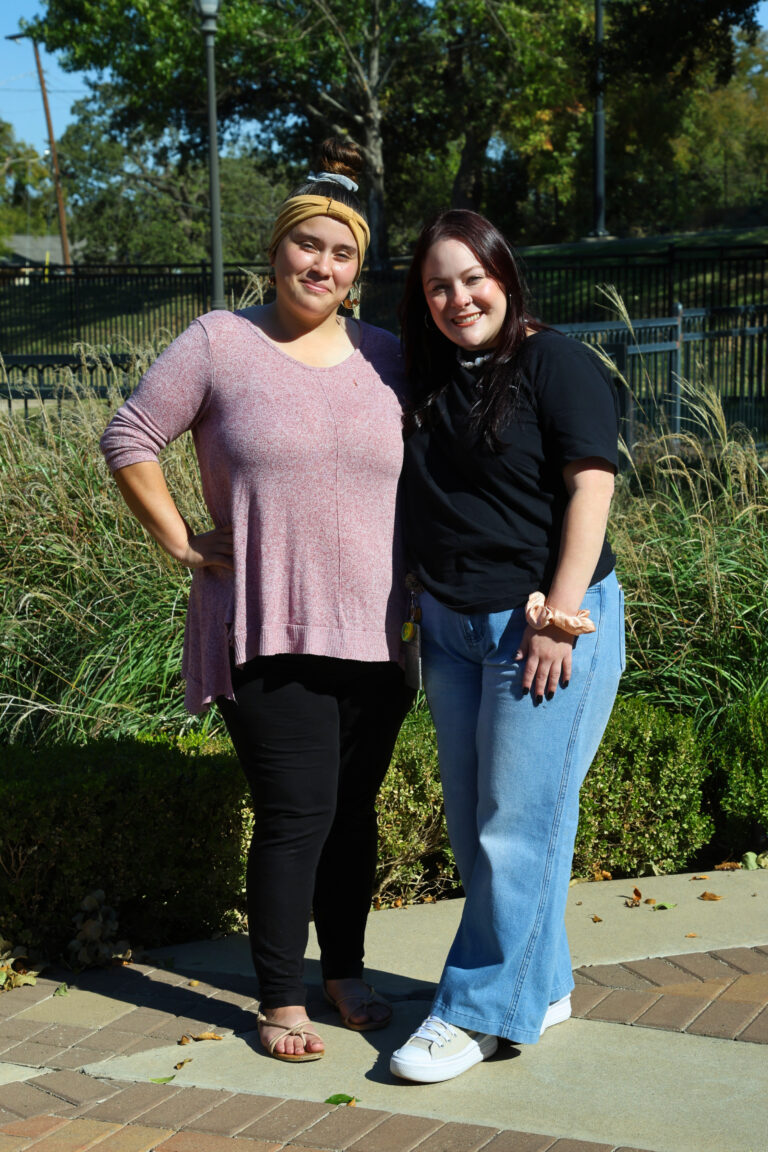
Alyssa and Malee

Healing through connection: A mother’s journey with TBRI®

What follows is a heartfelt letter from Alyssa G. to ACH TBRI Parent Educator Malee Sims. Alyssa is a mother who has experienced the transformative power of TBRI after reuniting with her foster children. Her story is a testament to the resilience and strength of families who face challenges head-on and emerge stronger together. Malee says she is honored to have trained Alyssa in the TBRI Partnering with Parents certification program.   

Leading and witnessing a mother’s transformation

ACH TBRI Parent Educator Malee Sims describes a success story with Nakeia H., a recent TBRI Partnering with Parents graduate. Nakeia didn’t want to tell her son “no” until she reflected on her on her past, her own mother’s discipline troubles, and what happens when you fail to take control.

Yet More Praise from a TBRI Partnering with Parents graduate

When I first met Malee, I was pregnant and my emotions were all over the place. I honestly didn’t know what to expect and was afraid I might be judged. But the moment I opened up, she welcomed me with so much understanding and kindness. She introduced me to TBRI®, which focuses on helping children who come from hard places and the need to feel safe and understood.

“I’ve learned to stay calm, to connect, and to guide them with love and patience.”

-- Daijahne

What meant the most to me was how the things I learned not only helped my kids, but it helped me too. I began to see their behaviors differently not as defiance, but as communication. They’re still learning how to express themselves, and sometimes it comes out in ways that are hard. But with the tools Malee gave me, I’ve learned to stay calm, to connect, and to guide them with love and patience.

Since working with Malee, my son has hardly been in timeout. We understand each other so much better now. I’m so grateful for her guidance — it’s truly changed our home. I know that when they fully come home, we’re going to have a lot of amazing things to learn about each other.

— Daijahne H.

While this program is for families in the child welfare system, ACH also offers youth and family counseling at no charge.

Find out more here or call 817.335.HOPE (4673).

Leading and Witnessing a Mother’s Transformation

ACH Child and Family Services utilizes Trust-Based Relational Intervention® (TBRI®) to build trust and connection with vulnerable children. TBRI is so effective, ACH also trains parents in the child welfare system so that the family benefits as a whole. Here, ACH TBRI Parent Educator Malee Sims describes a success story with Nakeia H., a recent TBRI Parenting Partnership “graduate.”

A difficult first impression…

Nakeia couldn’t understand her 13-year old son’s, aggressive, explosive, unpredictable behavior. In fact, Julian’s behavior was responsible for their evictions from several apartments.  She knew she needed help and that’s why she decided to enter joint managing conservatorship with Child Protective Services.

“When I met him, he lacked the skills needed to effectively communicate what it is that he needs,” says Malee. “He resorted to attempting to communicate through his behaviors but was almost always misunderstood. He was suffering from being constantly frustrated.”

“On the other hand, initially connecting with Nakeia was difficult because she was resistant to the techniques of the training,” says Malee. “She didn’t want to accept alternatives to saying ‘no.’”

“TBRI is an evidence-based intervention model. It’s not about gentle parenting or being a millennial parent.”

Malee Sims
ACH TBRI Parent Educator

Looking back, Nakeia agrees.

“If I could do my first two meetings over again, I would,” she says. “I came in hot. I came in with an attitude. I came in with the mindset of ‘No one can tell me anything that I don’t already know about a child that I’ve been raising on my own for all his life . . .no parent is perfect.’”

…with nowhere to turn

At one point during the open case (which was officially closed in August), Julian returned home, with his behaviors still being a problem. However, this time she had little support from the child welfare system. Because Nakeia still did not feel equipped to manage Julian’s behavior, the first return home failed and Julian wound up back in various RTC’s and behavioral hospitals.

Ayden returned home again during the time Nakeia was working with Malee at ACH. This time, Nakeia was living in her car because of her record of Julian-related evictions. To make matters worse, Julian was on probation in the juvenile justice system. No apartment would accept them, so they moved in with Nakeia’s mother.

Unfortunately, Nakeia’s mother was really hard on Julian. She failed to recognize he was just trying to adjust to being back home. The grandmother had zero tolerance for what Malee describes as “normal” teenage behaviors. Malee told Nakeia that the issue wasn’t as much about Julian’s behavior as it was her mother’s. And, by not taking control, she may have actually contributed to their situation.

A lightbulb moment turns into a brighter future

In TBRI Caregiver meetings with Malee, Nakeia learned that parenting is perfect maybe 30% of the time at most. The rest of the time is considered rupture and repair, which is how you learn and grow. In this “scaffolding” process, you learn where you are at and then move on.

“TBRI is an evidence-based intervention model. It’s not about gentle parenting or being a millennial parent,” says Malee.

When Nakeia saw the light, she decided it was best to distance herself and her son from her mother by moving into an extended stay hotel. At the same time, she grew to understand more about Adverse Childhood Experiences (ACEs) and began practicing a technique called Connecting, Empowering, and Correcting.

“I thought I knew it all, and I thought wrong,” says Nakeia. “I learned a lot from TBRI about not only my child, but about myself as well. If I can give anyone one bit of advice to take with you when you go down this journey, it would be that it’s okay to listen, and it’s okay to learn. To trust the process, but most importantly, listen.”

Nakeia and Julian have since been accepted to a housing program, and things are really looking up for them. Julian is on the football team, and for the first time—enthusiastic about school. There are still challenges to overcome, but their future is looking much more promising.

While this program is for families in the child welfare system (CPS), ACH also offers youth and family counseling at no charge.

Find out more here or call 817.335.HOPE (4673).

TBRI was developed by and is the signature therapeutic model of
Texas Christian University’s
Karyn Purvis Institute of Child Development.

The Boy Who Didn’t Know It Was His Birthday

A boy blows out candles on a birthday cake.

A belated birthday party becomes a powerful moment of healing, showing why safe, stabilizing care for children in crisis matters more than ever.

When 5-year-old Leo* arrived at the Pat O’Neal Youth Emergency Shelter with his two older brothers, he carried no belongings, no toys, and no sense of what it meant to be celebrated.

The boys had been living in an environment marked by neglect. Their parents were in and out of incarceration, drugs were present in the home, and the children were often left unattended. At one point, neighbors reported them wandering door to door, asking strangers for food. That’s how authorities intervened and directed the boys to the shelter. Once the boys were in a safe place, they were they were transferred to ACH’s Secure Assessment Facility (SAF).

The SAF is designed to meet the needs of children ages 5 to 17 who are in the child welfare or mental health systems and are experiencing a crisis or a transition between placements. The program provides a safe and secure setting for children in the midst of the crisis and offers assessment and treatment services until the the best placement to meet their needs is determined.

At SAF, for possibly the first time, Leo and his brothers had a stable, safe place with attentive adults they could trust.

Thank you for . . . Everything

From the moment the boys arrived, staff noticed how unusually grateful the boys were for every little thing. At their first meal, they marveled at everything, including the plates, cutlery and napkins. They thanked staff for every detail, saying “Thank you for the plate” and “Thank you for the food.”

It was clear how little they had been given before, and how much even the simplest kindness meant.

While reviewing paperwork, a caseworker realized that Leo’s birthday had just passed. When staff wished him a happy birthday, he looked confused. He didn’t know it was his birthday. He didn’t even know how old he was.

For children in survival mode, birthdays aren’t marked on calendars. They aren’t counted down with excitement. They simply pass unnoticed.

Finally Seen and Celebrated

Determined to change that, the staff quickly organized a party. They bought balloons, cupcakes, and even a slip-and-slide for the backyard.

That afternoon, Leo and his brothers laughed and played until dinner, then gathered for cake and celebration. For the first time, Leo experienced what it felt like to be noticed, cherished, and celebrated. The joy on his face told the staff everything. They had given him more than a party. They had given him a memory of belonging.

After about six weeks at SAF, Leo and his brothers transitioned to a foster home where they could stay together. While their journey is far from simple, that birthday marked a turning point—a reminder that even small acts of care can restore dignity and hope.

*Name and likeness changed for privacy purposes.

A blue paintbrush line graphic.

About Our Secure Assessment Facility

In recent years, there has been a troubling increase in self-harm, runaway incidents, and other high-risk behaviors among children in crisis. To meet this urgent need, ACH launched the Secure Assessment Facility (SAF) in 2023.

The SAF provides a safe, structured environment for children ages five to 17 who are part of the child welfare or mental health systems and are experiencing a crisis or transition between placements. Within this setting, children receive therapy, close supervision, and comprehensive assessment services.

The goal is simple but vital: to stabilize children during their most vulnerable moments, give them the support and treatment they need, and work alongside them to identify the next placement that best fits their long-term needs. Above all, the SAF ensures that every child is protected, cared for, and given the chance to move forward with hope.

Our expenses for the Secure Assessment Facility are greater than our resources and we are projecting a funding gap of $1,204,821.

If you can help, please consider donating. We appreciate any support, as it helps our community with needed programs and services like the SAF.

Families Connect by Sharing Cultures

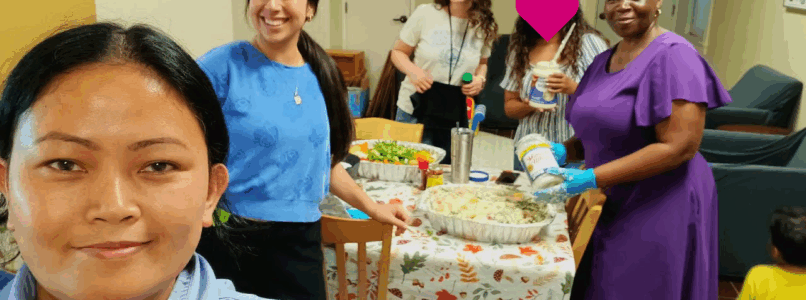
Rochel, a former resident of Families Together, shares her Filipino culture through cooking.

A former ACH client shares her culture and fosters connection with staff and other families.

At ACH Child and Family Services, we are proud to celebrate the vibrant cultures of our staff and clients by highlighting voices like Rochel’s—whose resilience and compassion have left a lasting impression on our community.

Sharing Culture Through Cuisine

For Rochel, who came to the United States from the Philippines, food is more than nourishment. To her, it’s a way of telling stories, building bridges, and honoring tradition. During her time in ACH’s Families Together program, Rochel participated in Chef’s Corner, in which clients are encouraged to prepare a meal from their culture and share it with staff and peers. Rochel introduced staff and fellow residents to dishes from her heritage, teaching others not just how to cook, but how to stretch meals thoughtfully—a blend of cultural tradition and practical life skills. Fellow mothers, children and staff enjoyed traditional Filipino dishes, such as Jollibee spaghetti; “biko” sticky rice pudding cake; and lumpia

“It’s amazing to let someone eat what you make, and having someone believe you can do it,” Rochel said. “This empowers us—not just to cook, but to lead, to teach, and to be proud of who we are.”

Her cooking didn’t just fill the room with incredible aromas—it created an atmosphere of curiosity, unity, and appreciation. It was a reminder that culture is not just something we celebrate—it’s something we live, together.

Rochel’s influence continues as she moves forward in her journey. Thanks to the therapy and skills she learned in Families Together, Rochel now lives with her daughter by her side.

A blue paintbrush line graphic.

About ACH's Families Together Program

Families Together provides transitional housing for single mothers and their children who are experiencing homelessness due to intimate partner domestic violence crime victimization. The program offers a safe and stable living environment while they work to overcome the trauma that led to their homelessness and return to independent living. Families receive intensive case management and therapeutic services designed to help them heal from the trauma and victimization they’ve experienced, while gaining the skills they need to promote long-term self-sufficiency and obtain stable housing.

This year’s projected expenses for Families Together exceed our resources by more than $200,000 and we appreciate any help in funding this vital community resource.

A Mother’s Plea for Help

ACH Child and Family Services often witnesses acts of selflessness, and we are there to make sure those sacrifices are not in vain.

This past April, an FBSS (Family Based Safety Services) worker contacted ACH Child and Family Services’ Assessment, Intervention, and Referral Services (AIRS) department for help. She was desperately trying to find placement for two youths on her caseload but had been turned down by numerous programs and shelters in the community. The children had been living with their mom in her truck due to chronic homelessness and their mother’s addiction.

The FBSS worker explained how the mom had been accepted into a rehab program in Dallas. However, she needed to find a place for her children to live while she completed the program due to her limited social support network. Once enrolled in the program, the mom could not leave the campus, or she would forfeit her spot.

“The stakes were high for this family,” says Kara Holmes, a clinical manager at ACH. “If the mom did not successfully complete this rehab program, she would lose custody of her children, and they would be placed in the child welfare system. If she didn’t find a place for her children to safely live, she couldn’t enter rehab.”

A Lifeline: ACH’s Pat O’Neal Youth Emergency Shelter

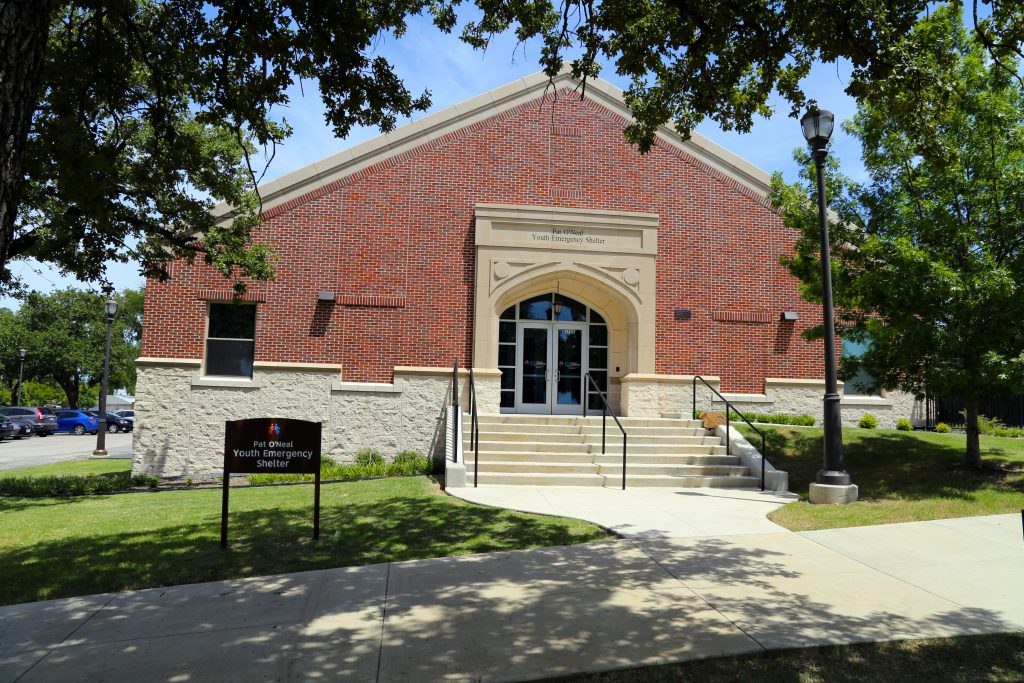
Since the mom was the legal guardian of the children, AIRS instructed the FBSS worker to have the mom call back and complete a referral form for ACH’s Pat O’Neal Youth Emergency Shelter. The shelter, which is for ages 5 to 17, is the only 24/7 shelter for youth in Tarrant County.

Determined to start her path toward recovery and keep her family together, the mom followed through and completed the shelter referral form. The shelter leadership team immediately accepted placement of the siblings.

The two siblings were placed at the shelter the Monday after Easter, and the mom reported to the rehab program that same day.

Coordinating Care and Support

When children enter the shelter, there are naturally some adjustments and challenges. They’ve often been uprooted in a short amount of time, there are new faces, and strange-to-them routines. In this case, one of the siblings needed some prescribed medications. Because the mom was the only person with the right to consent to any kind of treatment, our youth and family engagement specialist diligently worked with the FBSS worker, the caseworker at the rehab facility, and the mom to coordinate care for this child.

On another occasion, both children reported feeling sick. Again, the youth and family engagement specialist coordinated care with all involved parties to make sure the needs of the children were met.

These siblings were enrolled in our on-site FWISD charter school and successfully completed their school year. They received weekly individual therapy to support their emotional well-being during their stay at the shelter, as well as weekly connection and support from our youth and family engagement specialist. Our team ensured their basic needs were met, including purchasing clothing and supplies for the siblings.

A Mother's Journey to Recovery

Their mom completed her rehab program in Dallas, and as a result, she qualified for assistance in obtaining a job and securing housing. The youth were in our shelter for a total of 63 days.

When a child has experienced significant trauma such as this, it’s important for them to continue receiving support as they navigate a new normal. ACH’s continuum of care is tailored to help children and families no matter where they are on their life’s path. For this family, once the children were discharged from the shelter and received their mother’s permission, the children are now receiving free weekly outpatient counseling through our Real Help for Real Life program.

Real Help for Real Life provides help and support for youth, ages six to 17, and their families through our Youth and Family Counseling and Skill-Building Classes. These services are provided at convenient locations in Tarrant, Johnson, Parker, Hill, and Palo Pinto counties.

When a mother was ready to help herself, ACH was there to lovingly care for her children until she was able to get back on her feet.

A blue paintbrush line graphic.

AIRS serves as a portal to ACH programs and services, offering 24-hour crisis call response, centralized assessment to ACH programs and referrals to other services in the community. In 2024, AIRS referred 3,513 individuals to ACH programs and other services in our community.

The Pat O’Neal Youth Emergency Shelter (YES) is the only 24-hour emergency shelter in Tarrant County offering 24/7 safe shelter to runaway and homeless youth, and trafficking survivors, ages 10-17.  ACH works to reunite them with their families, or find safe and stable alternative living arrangements. The program provides outreach, education, advocacy, counseling, and case management services for foster care and community youth who are experiencing family crisis, family conflict, or homelessness.

Archie’s Journey to Stability and Growth

When Andrea, an ACH Child and Family Services Kinship Connections specialist, was assigned to Archie’s case, she knew the journey ahead would require patience, empathy, and a strong network of support. Archie, a bright and energetic five-year-old boy, had recently been removed from his mother’s home due to trauma and an episode of paranoia that led to an unstable and unsafe environment.

The trauma Archie experienced left deep emotional scars, and his behaviors were often misunderstood, especially since he also displayed signs of autism. The road to stability and growth for Archie was going to be a long one, but with Andrea’s guidance, both Archie and his aunt, who had taken on the role of his primary caregiver, would soon find a way forward.

The Initial Challenges

Archie’s journey to safety and understanding started when Texas Child Protective Services (CPS) removed Archie from his mother’s home, located in Tarrant County. Since Archie’s father was not in the picture, CPS placed Archie in the care of his Aunt Sarah, a compassionate woman who also lived in Tarrant County. She had always wanted to help Archie but had never anticipated taking on the full-time responsibility of raising him. At first, Sarah struggled to connect with Archie, especially when his behaviors—such as heightened anxiety, meltdowns, and difficulties with communication—began to escalate.

His social interactions were challenging, and he was often misunderstood by family members, school staff, and even peers. Archie’s struggle with language was one of the biggest barriers. He had been raised in a household where only his mother’s language was spoken, and now that he was in a new environment, his lack of English skills made it difficult for him to understand or communicate with others.

Understanding Archie's Behaviors

After CPS placed Archie with his aunt, Our Community Our Kids referred Sarah to Kinship Connections so she could receive additional resources. That’s when Andrea was assigned to the kinship family.

From the beginning, Andrea knew that understanding the root causes of Archie’s behaviors was crucial to helping the family build a foundation of trust and connection. Through close collaboration with Sarah, Andrea identified how Archie’s behaviors were a combination of sensory sensitivities, social anxiety, and struggles with communication—common traits for children on the autism spectrum. It was clear that the behaviors weren’t just disruptive; they were a way for Archie to express confusion, fear, and frustration in a world that didn’t always make sense to him.

Andrea began coaching Sarah on how to respond to these behaviors using a trauma-informed, child-centered approach. She introduced her to Trust-Based Relational Intervention® (TBRI®), a model developed by TCU’s Karyn Purvis Institute of Child Development that empowers caregivers to build connection through empathy and understanding. She also implemented Applied Behavior Analysis (ABA), which focuses on reinforcing positive behaviors through structured, supportive methods.

Positive Reinforcement Through a Reward System

Andrea also worked with Sarah to implement a token economy at home, where Archie could earn tokens for exhibiting positive behaviors. These tokens could be exchanged for small rewards, such as extra playtime or a favorite snack. This system gave Archie a sense of accomplishment and control over his environment, which was vital for a child who had experienced so much instability.

TBRI’s emphasis on empowering principles—such as giving Archie a voice in decisions, using calm and consistent guidance, and maintaining a predictable routine—made an immediate impact. Sarah learned how to respond to Archie’s needs in ways that were both compassionate and effective. She began to notice that when she used clear, direct language and offered choices, Archie felt more secure and less anxious. 

A child's hand slides a red token across a table.

As a result, his outbursts became less frequent, and he started to engage more with her and his surroundings. The token economy, combined with TBRI’s emotional support techniques, allowed Sarah to see Archie’s progress in real-time, creating an environment that was nurturing for both of them.

Advocacy within the ISD

However, Andrea didn’t stop there. She also advocated for Archie within the school system. Knowing that Archie’s challenges were not only behavioral but also academic—especially with his language barrier—Andrea worked with the school district to secure additional resources for him. She arranged for English as a Second Language (ESL) support and for a dedicated special education professional to help Archie navigate the classroom.

After three months with Andrea, Archie and his Aunt Sarah are on the path to happiness. Today, Archie is thriving in a stable, loving home with his aunt. He is no longer defined by his past trauma or misunderstood for his behaviors. He is beginning to show signs of emotional and social growth, and Sarah continues to implement TBRI principles in their daily routines.

A Journey of Empathy and Growth

Though there are still challenges ahead, both Sarah and Archie know they are not alone. With the support of Andrea, ACH Child and Family Services, and a community that has rallied around them, they have created a home that is filled with understanding, connection, and hope for the future.

Archie’s journey is a testament to the power of empathy, advocacy, and trauma-informed care. Thanks to ACH and Andrea’s expertise and unwavering support, Archie is now on a path to success, surrounded by the people who care for him most.

ACH Child and Family Services strongly promotes the philosophy and practice that when children cannot be with their parents safely, the next best option is a relative such as a grandparent, aunt, uncle, sibling, or close family friends. Our Kinship Connections program places foster children in the home of a relative or person who knew the child before he or she was removed from the home. Research shows that kinship placements provide a sense of stability, identity and belonging during a time of crisis and help preserve the child’s cultural identity and relationship to their community. Kinship Connections is voluntary assistance to help families in the child welfare system adapt to their new role as caregiver. ACH also offers a similar free program, Kinship Navigator, for youth and families in the community who are not in the child welfare system.

Comic Book Artist Draws Praise from Kids in Transitional Living

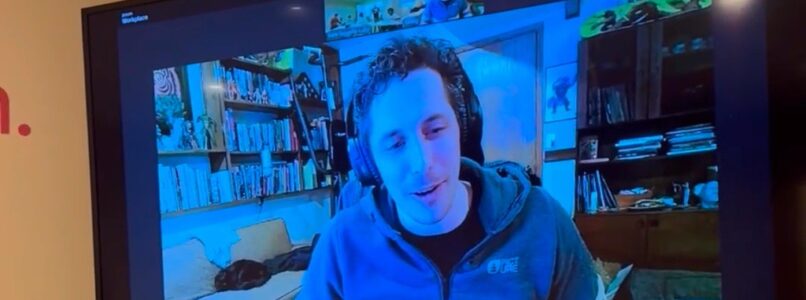
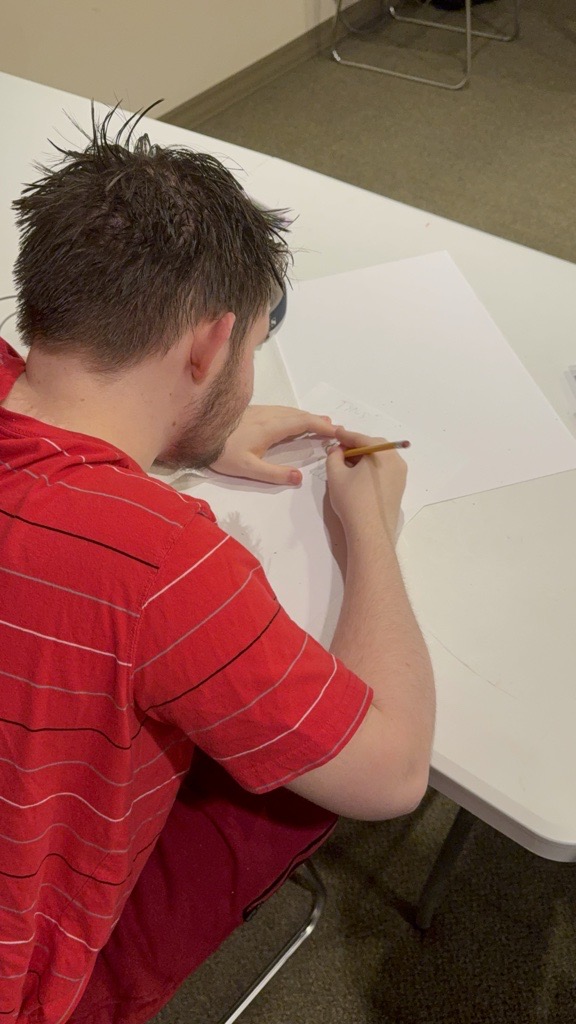
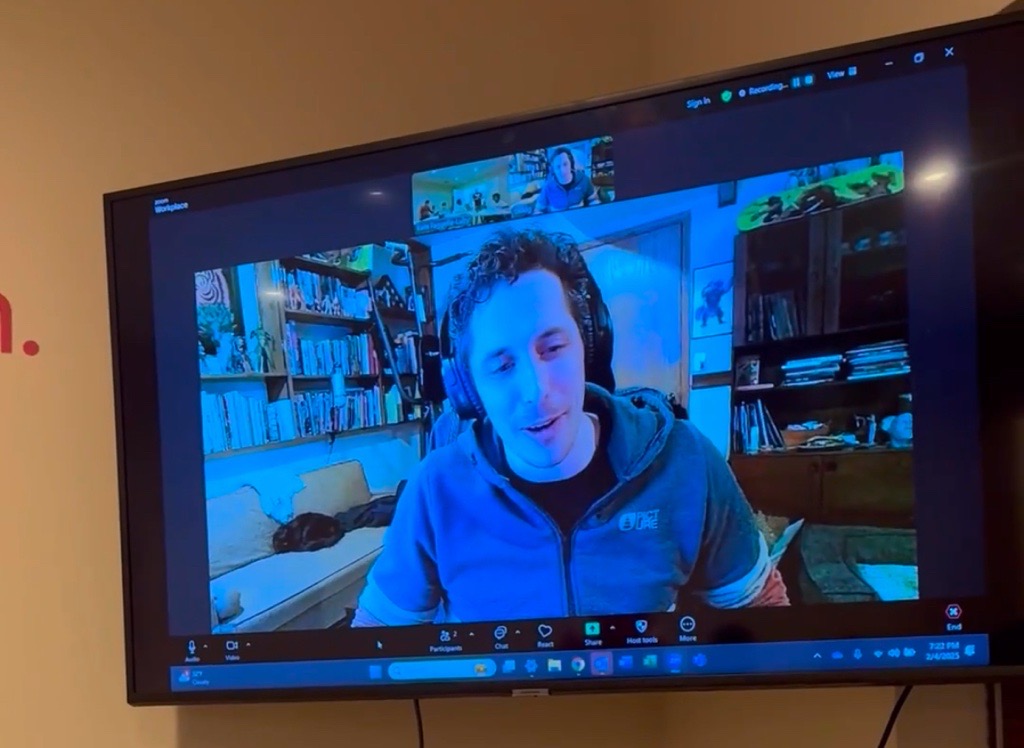
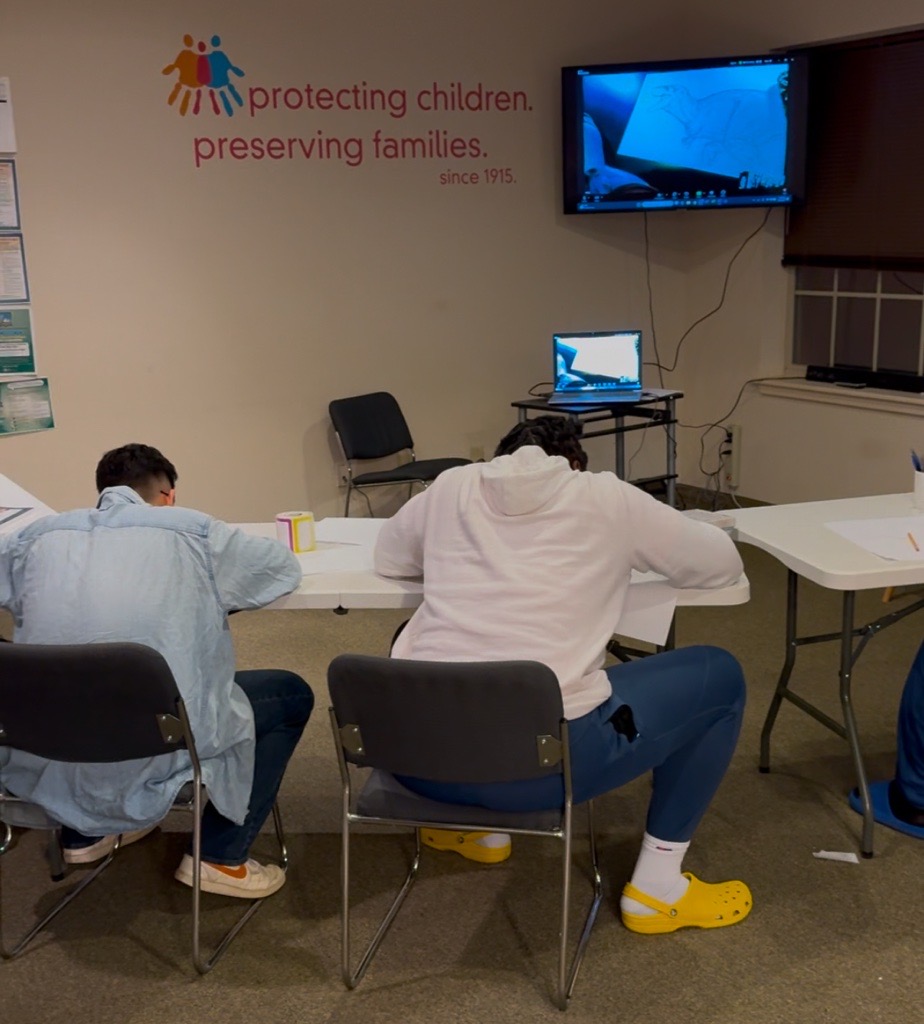
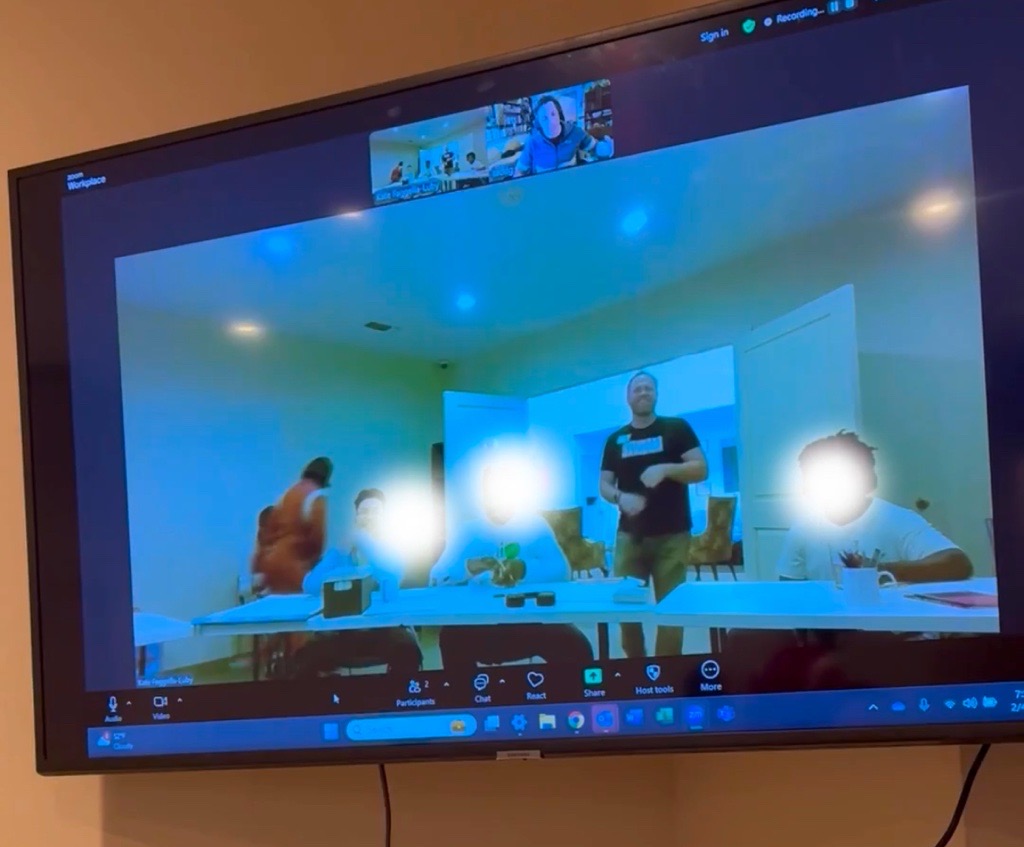
Professional comic artist Tadd Galusha gives a drawing lesson via Zoom to residents at ACH Child and Family Services Wedgwood Transitional Living Program.

Good overcoming evil. Protagonists, antagonists, and antiheroes. Origin stories brimming with traumatic pasts and challenges and topped with resilience and hope. It’s not hard to see why the children in ACH’s care are often drawn to all things comics. 

The wildly imaginative world of comics allows kids a distraction from what they’re experiencing, but in a way that relates to the obstacles they’re facing in real life. Whether they realize it or not, comics are both an escape and a way to dream.

A Comical Night

Professional comic book artist Tadd Galusha rarely if ever gives a two-hour drawing lesson. But on a special night during one of the bi-weekly volunteer events at our Wedgwood Transitional Living program campus, that’s exactly what he presented to the young men in the program! Tadd, who is based out of Alaska and is friends with one of the Wedgwood volunteers, tuned in via Zoom and spent the evening drawing character after character — from Raphael (Teenage Mutant Ninja Turtles) to Goku (Dragon Ball Z), plus a gnarly tyrannosaurus rex. The boys were glued to the monitor.

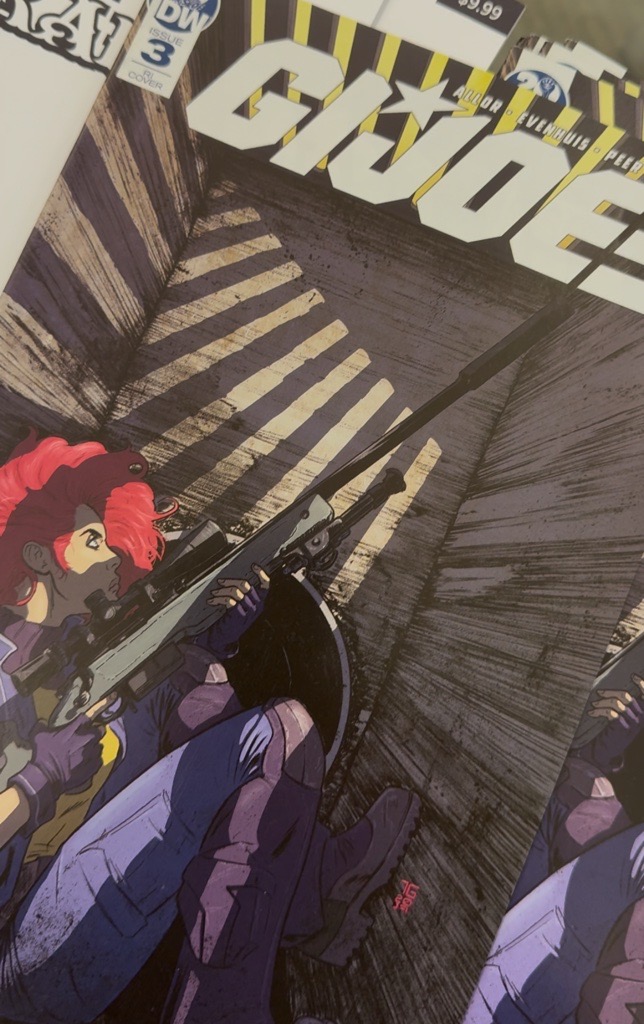
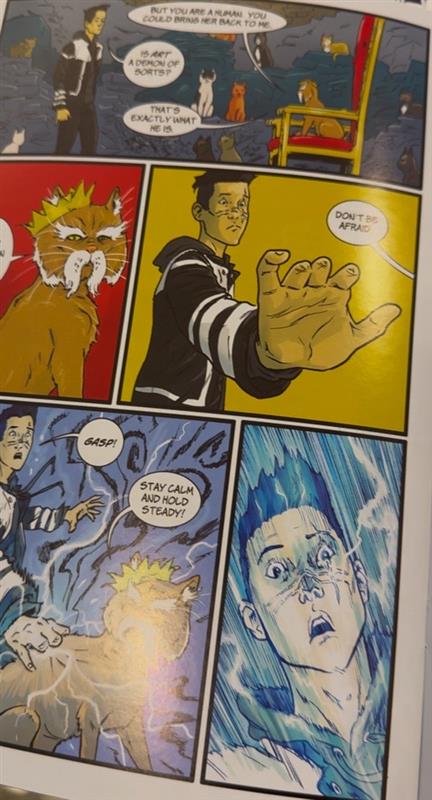
A few days prior, Tadd mailed several comics for each of the kids. They were all comics he had illustrated and/or wrote. In addition to publishing his own graphic novels, Tadd has worked for major publishers on properties such as Godzilla, Teenage Mutant Ninja Turtles, GI Joe, and King Kong.

It’s not uncommon for the children at Wedgwood to be quiet and reserved when talking to adults. Their trust has been compromised, and they’re understandably wary of people they don’t know. Comic book night was NOT one of those nights.

Chatter, laughter and friendly teasing filled the room. Tadd had been briefed that the kids may be shy and that he may have to do most of the talking. It couldn’t have been farther from the truth.

Sometimes he could hardly fit a word in edgewise! The kids debated about hypothetical match-ups between comic characters (think Superman versus Batman), their favorite Marvel movies, their least favorite Marvel movies, and more. 

“When ACH’s volunteer mentors team up with our youth, amazing things happen!” says Kate Faggella-Luby, ACH volunteer mentor coordinator. “In the epic match up of community and belonging vs. isolation and trauma, COMMUNITY and BELONGING win every time.”

Heroes of Tomorrow

Eventually, the kids asked Tadd about his career. They peppered him with questions about illustration, graphic design, script writing, and college. The adults in the room glowed seeing the kids dream about a potential careers and goals. Tadd masterfully answered with optimistic and encouragement, but he was honest in that it’s a competitive industry that requires dedication and hard work.

The night flew by, and volunteers had to put a hard stop to the night when the clock struck 9 p.m. Both volunteers and children did not want the event to end.

It felt like a night of authentic comradery. People in our community and beyond showed up for these kids because they want to. Because they genuinely care and are invested in these children’s upbringing and future. Bridging the gap between our community and marginalized youth is one of the many ways ACH serves families and children. 

Thank you to Tadd, the volunteers, the Wedgwood team, and to Kate for orchestrating this unforgettable night!

Professional comic artist Tadd Galusha gives a drawing lesson via Zoom to residents at ACH Child and Family Services Wedgwood Transitional Living Program.

Wedgwood Transitional Living

Children who can’t live with their families or are difficult to place in a permanent family setting have a safe place to call home in the Wedgwood Transitional Living program. The program provides a stable, nurturing place for children ages 14-17 who have experienced severe trauma and, as a result, often have emotional outbursts, attempt running away, experiment with drugs, and other challenging behavior.

Wedgwood Transitional Living offers a place for them to heal, grow and learn independent living skills. Trained staff help the children graduate from high school, apply to college/continued education, enter the workforce, find volunteer opportunities, and develop healthy lifestyles. Counselors teach the children how to express their emotions in healthy, productive ways, cope, and manage their behaviors.

ACH is committed to providing safe environments for youth to begin the healing process and to develop lifelong skills that will support future placement through foster/adoption or independence. 

The Crutcher Family

Yes, Yes, and Yes Again

The journey of adoption holds many uncertainties but with the right support, the Crutchers are equipped to meet their children's needs.

“Children in the foster care system have experienced trauma,” ACH Foster Care and Adoption Specialist Cheryl Donovan explains. “It is a painful journey for them, but the difference adoption makes in their lives is beyond measure. They are wanted, are given another chance at having a childhood, and have opportunities for the future.”

Adoption was always a part of the Crutcher family plan. Heather and Dave went to grade school together, but it wasn’t until 28 years later that they reconnected, fell in love, and got married. With no children of their own, they opened their hearts to earnestly seek out and care for other children without families. They wanted to provide a safe and stable home for vulnerable kids that needed support.

“We started researching and looking for an adoption agency. We selected ACH because they’re well established with a great history.”

The Crutchers began the process of gaining licensure for a matched adoption in 2020. There was paperwork to be filled out, information to file, and training courses to take. Many of their meetings and trainings were held online due to COVID, but an ACH Foster Care and Adoption Specialist remained alongside to conquer the in-depth process together.

They knew the journey could be long and were ready to endure the challenges. The Crutchers remained persistent and eventually everything was approved and finalized—they were licensed for adoption the week of Christmas! Heather and Dave were ready to find their match and provide children with a forever home.

Heather and Dave said ‘Yes’ and never looked back

Heather and Dave always knew they wanted to adopt a sibling group. They each have siblings of their own and enjoyed having a full house and growing up with “automatic friends.” Heather and Dave also recognized that adoption for a child, as exciting as it is, is also difficult. They wanted the child they adopted to have someone else in the home who they were already bonded with to transition and grow up with.

They were notified about three sweet sisters, Abbey, Emma, and Ava, ages 5-7, in need of a forever family.  “Our hearts were drawn to them and we said yes. But our story is a little unique. With our girls, it wasn’t just one immediate ‘yes’ and we were matched,” Heather recalls. After Heather and Dave’s initial ‘yes’ to pursuing adoption of Abbey, Emma, and Ava, they received another email that explained two of the girls have DiGeorge syndrome.

DiGeorge syndrome occurs when a small part of a chromosome is missing and can result in the poor development of several body systems1. More extreme cases included heart defects, poor immune system function, a cleft palate, low levels of calcium in the blood and delayed development with behavioral and emotional problems. The symptoms and treatment would vary. The Cruchers wouldn’t immediately know what kind of medical attention the girls would need throughout their lives because of their medical condition.

The Crutchers were unfamiliar with DiGeorge syndrome, but what they did know was there was no way they could back down from these girls now. Heather shares, “We prepared our hearts for what it could mean raising girls with DiGeorge, we were willing to go beyond what was expected, and committed to saying ‘yes’ for our girls, again.” Heather and Dave had not yet met the girls, but already their hearts were bursting for them.

They never doubted that the girls were meant to be with them

The Crutchers were matched with the girls in September of 2021 and their formal names as Crutchers would become Abigail, Emmaline, and Ava Grace. Heather and Dave were patient: They never doubted Abigail, Emmaline, and Ava Grace were meant to be with them. They were joyful and gracious through each bump in the road because they were confident the day would soon come when they would finally welcome the girls home forever.

It wasn’t until the end of January 2022 that Heather and Dave first met the girls in San Antonio. They were intent on bonding and played a lot that weekend to get to know each other. The next step was for the girls to visit Heather and Dave and stay with them at their home in North Richland Hills. At this time, an epic snowstorm hit, and all travel was canceled. What was supposed to be a 4-day visit turned into a 24-hour stay. The girls flew from San Antonio on Monday and left Tuesday.

Heather wasn’t upset or bitter when she recalled the delays and changes, she was just thankful the girls were able to visit at all. Even seeing them for just one day was all she could hope for. Again, they played and laughed, a lot! The goodbye was even harder than before. “It was heart-wrenching saying goodbye,” Heather confessed. Yet there was great hope knowing this would not be the end of their story.

Now with a part of their hearts with the girls, they couldn’t wait for placement day. Heather and Dave made one more visit to see the girls, bonded even more, and learned each other’s personalities even better. “When it was time to say goodbye there were a lot of tears from all of us. The girls didn’t want to leave, and we didn’t want to leave. It was heartwarming. The bonding had already started which was an amazing feeling.” This goodbye was a little different. They knew the next time they would see the girls in person would be when they came to live with them forever. There was an eagerness for what was to come.

In March, the girls officially moved in!

ACH helps provide the resources for the unexpected journey ahead

“ACH helped us fill our toolbox for the unknowns that come with adoption, and we felt more prepared to welcome home our girls,” Heather shares.

There can be many unknowns that await adoption parents. Each child is unique and it can’t be predicted how past experiences and traumas will affect them. ACH is present to help parents feel prepared and supported throughout the transition. The Crutchers were no exception.

Heather recalls the early weeks of their transition, “All the things they train us for that could happen, I feel like we experienced in the first 6 weeks of the girls’ transition.” As developmental delays resulting from their past trauma became more apparent, they were intent on making playtime more educational. New discipline techniques needed to be adjusted as Heather and Dave discovered areas the girls may not have had attention in before.

“A sense of belonging is crucial for all of us. A forever family is the greatest blessing of all time.”

Some of the techniques they found helpful and continue to use today come from the Trust-Based Relational Intervention (TBRI®) training taught by the ACH team. Heather and Dave try to clearly communicate expectations to the girls, prepare them for what’s coming next, and offer choices to empower the girls. “This has made a huge difference in how we can care for them,” Heather shares.

In addition to two of the girls having a mild form of DiGeorge syndrome, Heather and Dave discovered that the girls had also experienced a high level of medical neglect in their past that now required an increased amount of attention. This didn’t stop Heather and Dave’s love. They were committed to giving fully of themselves to Abigail, Emmaline, and Ava Grace through their transition into a new family and home. Though at times difficult and trying, they never gave up, lost hope, or doubted these girls were meant to be with them.

Cheryl shares, “The Crutchers gave them a normal life with family outings, church attendance, and activities. They were committed to these children.” Heather and Dave established regular rhythms for the girls including summer activity classes at The Little Gym®, church on Sundays, regular visits to Play Street Museum, and letting Abbey, Emma, and Ava just be kids.

The Crutchers couldn’t imagine their family any other way

Walking through this journey with ACH, Heather and Dave were connected to a community of other adoptive parents and staff ready to help with any need. Heather is thankful for the relationships she made along with way. “ACH brought us a lot of connections and relationships with other couples either going through the same thing or wanting to be on the same journey as us,” she says. “We never felt alone throughout the process.” These couples have remained a support and source of encouragement for Heather and Dave. They can reach out to these families to ask for advice, to relate with, and to share experiences.

Heather encourages, “It’s a wild ride at first, but buckle down. You don’t know the curveballs you’re going to get, but you will find what’s normal for your family. You really just have to be advocates for your kids.”

Heather wondered if they had been too afraid of the “unknowns,” yet one thing she has no regrets about is saying “yes” to their girls. Abigail, Emmaline, and Ava Grace have changed their lives for the better. They are loving, affectionate, and full of so much hope and joy. Their smiles are sure to brighten anyone’s day.

“A sense of belonging is crucial for all of us,” adds ACH’s Cheryl Donovan. “A forever family is the greatest blessing of all time.”

There are still many unknowns Heather and Dave are patiently waiting to discover, but they are better equipped, and not alone, on their amazing journey.

Melanie’s Journey

One Mom's Journey to Freedom

ACH's Families Together program helps Melanie find confidence in herself to be the mom she aspires to be for her son.

Research shows that it can take up to 7 attempts to leave before a survivor permanently leaves an abusive partner. The main reason women have a difficult time leaving is fear of where they will go or who they could turn to for help. Oftentimes their partner has isolated them from friends and family leading them to believe there is no other life to aspire to.

Melanie had been told by her abuser for years that no one loved or cared about her. Since childhood, she craved the love and support every child needs and deserves. She lost her mother to suicide and was neglected by her father. Seeking affirmation from men in relationships became what she chased after. It didn’t take long before she was mixed in with the wrong crowd, making poor decisions, and losing every ounce of self-worth she had in herself. She continued in the pattern of pursuing toxic, abusive relationships and drug use throughout high school and into her adult years.

When something has been rooted so deep within you, the habits seem nearly impossible to uproot, especially on your own.

Melanie reconnected with her high school boyfriend, Jacob. He showed her affection, told her he’d do anything for her, and wanted to take care of her. Having already broken all relationships with her family, she agreed to move to another state to be with him. She didn’t think there was anything in Texas for her anymore. After a short time into their relationship, the two lost their first child together before birth, which Melanie believed strengthened their bond together. Despite the present abuse, the heartache brought them closer and would sustain their relationship even longer.

Trapped With No Clear Way Out

Melanie would soon feel more alone than she could ever imagine. Jacob wouldn’t allow her to have a job, make friends, or have any sense of freedom. She was able to remain in contact with her sister, who continued to listen but given her past life choices, kept her at arm’s length.

Melanie had experienced narcissistic control and verbal and emotional abuse in her previous relationships, but the physical abuse continued to increase with Jacob’s growing drug use. Not having anywhere else to go or anyone else to turn to, she would endure the abuse day after day.

Every time she attempted to escape, Jacob wooed Melanie back. Each time, Melanie took inventory of her life and believed Jacob’s words, “No one else could possibly care about me. He’s the only one that loves me. This must be what love looks like.” With no other option or hope for a better life, Melanie always returned to captivity.

Then Melanie became pregnant again. The turmoil to leave remained, but now with a baby almost here, she couldn’t risk trying to leave and stepping into the unknown. The final month of her pregnancy was an absolute nightmare of torment and abuse. It was the worst she had ever experienced and continued after her son was born. “Jacob continued using drugs, the physical abuse worsened, and he would drive erratically with our son in the back. It was terrifying.”  

“I hadn’t been there for very long and didn’t know people very well, yet I really felt at home at that moment.”

Relief came a month after her son was born. Jacob was finally arrested for giving Melanie black eyes. With the car in her name, Melanie made her way back to Texas. She secured temporary stays for her and her son with different nonprofits and organizations. Yet, in the midst of fear and continued lack of support, the temptation of past securities continued to haunt her. Melanie relapsed into her former drug use, severing any trust she had begun to build in her relationship with her family. She hated herself for it – again thinking very little of herself. Gazing at her son, she knew he needed better, if not for herself, she wanted more for him. Melanie committed to begin the slow process of cleaning herself up. She found organizations that would give her and her son a roof over their head and hope for another day. After a 30-day stay at A Better Tomorrow, she got connected to ACH’s Families Together program.

Families Together Became a Place to Call Home

Melanie remembers her and her son’s first month living at Families Together. The ACH team along with the other moms and their kids were making and decorating Halloween cookies. Melanie recalls seeing her son with icing all over his face when an ACH team member noticed, commented, and they all laughed together. A seemingly insignificant moment meant so much to Melanie, “I hadn’t been there for very long and didn’t know people very well, yet I really felt at home at that moment.” She felt embraced and supported.

The Families Together team encouraged Melanie to slow down and take some time to care for herself and her own healing. Family Care Specialist Sharla Hosford remembers her first impression of Melanie: “She was unsure of herself and what she was doing. She would beat down on herself. We wanted to help her see that she is worth it, has value, and is capable of accomplishing so many things.”

Melanie needed others to believe in her so she could learn to also believe in herself. She was very open and receptive to all the resources and help Families Together offered. She attended the weekly Nurture Group with the other moms where they supported each other, shared parenting advice, and learned from one another.

While at Families Together, Melanie not only experienced mental and emotional healing, but practical steps toward growth and independence. She was able to find day care for her son so she could work, provide insurance coverage for her and her son, purchase a car, and save money to one day live on her own.

“I love empowering moms to believe in themselves again and helping each of them realize what it took to get here. They’ve been torn down for so long – we help to build them back up.”

One of the most significant ways Sharla and the rest of the team were present in supporting Melanie was in the rebuilding of her family relationships. They reminded her that things take time, the trust needed to be gained back, and to be encouraged by her growth. Melanie was growing – in her confidence, in her self-awareness, in her independence. In her humble wisdom, Melanie shares, “One of the main things I’ve learned is that things take time. You didn’t mess up everything up in one day – it was gradual. And it’s going to take even longer to fix those things and rebuild, especially relationships.” Melanie’s family saw her commit to ACH’s Family Together program for the entire year and a half, which was a new feat for her.

Melanie always prioritized the wellness of her son. He gave her boldness, hope, and confidence to seek change. They soon were able to move into their own apartment. A huge accomplishment.

Finally Finding Sustainable Freedom

It has been over a year since Melanie moved into her own apartment with her son and left ACH’s Families Together program. She not only finds freedom from her abuser, but the past that haunted her. She’s confident in herself, in what she and her son deserve, and strives for her dreams again. She’s going to school to one day become a counselor.

“I am really grateful for ACH. I feel like if I hadn’t been here, I don’t know where I would be.”

Being at ACH allowed Melanie the opportunity to get her feet under her, know her self-worth, and take back control of her life. ACH’s Families Together program has a great impact because of the care of employees like Sharla, who is passionate about helping moms and families: “I love empowering moms to believe in themselves again and helping each of them realize what it took to get here. They’ve been torn down for so long – we help to build them back up.”

Names changed to protect privacy.

*Did you know that October is Domestic Violence Awareness Month? In Texas, 183 women were killed by a male intimate partner in 2020. 45% of those women were in the process or had made attempts to leave the relationship (Texas Council on Family Violence, 2020). On average, a victim will leave and return to the abuser 7 times before leaving that relationship permanently (The National Domestic Violence Hotline, 2022).

What is Families Together?
A blue paintbrush line graphic.

ACH’s Families Together Program provides transitional housing for mothers and their children who are experiencing homelessness due to intimate partner domestic violence. The program offers a safe and stable living environment while they work to overcome the trauma that led to their homelessness and return to independent living. Families receive intensive case management and therapeutic services designed to help them heal from the trauma and victimization they’ve experienced while gaining the skills they need to promote long-term self-sufficiency and obtain stable housing.

Ybanez Family

"It Never Happens This Way"

A touching story of adoption with a unique twist. With open and eager hearts, the Ybanez Family remains faithful to the process and continues to place each child’s needs above their own desires.

College sweethearts, Matt and Aimee, have always dreamed about adoption. “It’s always been a part of our family plan,” Aimee shares. Fifteen years into their marriage and two biological children later, it was time they got serious about it. Their kids were now at the age to understand what adoption is and be a part of the discussion. This would be a family decision and their girls, Keira and Micah “were enthusiastically on board!”

The Ybanez family jumped right into the adoption process. After extensive research, they found ACH Child and Family Services and loved that we work locally with the Department of Family Protective Services to care for children in the community.

They were showered in support from the very beginning. “Going into it, we were a little overwhelmed with the volume of items to complete,” said Aimee, “but ACH was great about keeping it organized and providing us options.” In just 8 weeks from the start of their training, they were officially licensed for matched adoption!

ACH is there, every step of the way

Lizbeth Bryant, Foster Care and Adoption Supervisor, was happy to walk this journey with Matt, Aimee, and their girls. She was ready to “fill their toolbelt” with all they’d need throughout this process – support groups, training classes, and frequent check-ins.

Finally licensed, the Ybanez family did not hold back. They eagerly threw themselves into every part of the adoption process, saying “yes” as a family and ready to provide a child a safe home.

They agreed to help children that needed temporary respite care as they waited to be matched with a child to adopt. Short-term respite foster care is when one family temporarily cares for another family’s foster children for various reasons. The Ybanez Family opened their home and hearts to many children. They never held back the love and care they had to offer a child in need. Matt and Aimee recall “accepting every respite request that came through – from an infant in double leg casts all the way up to a 12-year-old girl who stayed with us for almost two weeks.”

It was during this time of welcoming many children in and out of their home that they met Jenny.* After a trial run and a short weekend stay, they became the ‘go-to’ respite family for Jenny. During this time, Matt, Aimee, Keira, and Micah fell in love with Jenny.

From "matched adoption" to "foster to adopt"

Jenny was a 3-year-old girl whose case was still in process, and a safe permanent placement was still being determined for her. At the time, Jenny was living with a foster family that would later decide they would not be able to adopt her. The care team that surrounded Jenny then needed to search for a new foster family to take her in for the remainder of her case who could also be an adoption possibility.

Knowing Jenny would be in a safe and loving environment is all they truly sought.

Since the Ybanez family had already begun building a relationship with Jenny during multiple respite stays, they were being considered as a possible foster family and adoption match. First, the Ybanez family needed to change their adoption licensing from “match adoption” to also include “foster to adopt”. This was a major decision. Matt and Aimee never imagined they would foster, yet they had no doubts. They loved Jenny and were ready to welcome her into their family. The Ybanez family moved forward with the licensing change so they could become Jenny’s foster care family with the hope and possibility of adopting her.

It was soon looking like the decision on Jenny’s case would be that her biological mother’s rights were going to be terminated. The hearing was in just two weeks and the Ybanez family would foster Jenny during that time. Matt, Aimee, Keira, and Micah would go about their days and welcome Jenny with this anticipated plan in mind.

Yet the process continued. Meetings got delayed, extensions were given, and the timing is usually never as you’d expect. Jenny’s biological mother was given an extension in hopes of family reunification. In this new limbo, Jenny stayed with the Ybanez family for months while her case continued, only now the Ybanez family felt a little unsure how to prepare for the unknown outcome.

Protecting Children and Preserving Families

The Ybanez family remained supportive of Jenny’s biological mother throughout the entire process. Knowing Jenny would be in a safe and loving environment is all they truly sought. As they cared for Jenny, ACH remained there to offer the Ybanez family support and guidance along the way. They were faced to now navigate such conflicting emotions. They had such a deep desire to permanently bring Jenny home and knew the warm and tender care they would offer her.

At the same time, they had such a softness and hope for Jenny’s mom and the reunited family they could be. They never ceased to maintain Jenny’s best interest at the heart of each decision, no matter how joyful or painful it may be. 

How can you truly prepare for the unexpected? Being present and available is sometimes all you can do. Throughout this time, Aimee says, “Before we partnered with ACH we truly did not understand how much support and partnership there is, which is such a blessing. There is no shortage of support at ACH.” The Ybanez family felt more prepared to meet Jenny in her situation and care not only for Jenny but for their entire family. Jenny’s biological mother’s rights were soon reinstated and she was granted permanency. The best home now for Jenny was being reunited with her mom. 

It's what's best for the child that's important

The Ybanez family learned to walk not only with open hearts but open hands as well. While they never wavered from putting the needs of the child first, they fully realize how precious it is to preserve families. They have uniquely experienced the delight and heartache that comes with living so fiercely and boldly in love.

"There is no shortage of support at ACH."

ACH’s Lizbeth has seen their faithfulness to Jenny and is grateful to walk alongside the Ybanez family through this emotional journey. They may not have been able to welcome Jenny permanently into their home, but their hearts were open to far more than they thought capable.

Thanks to their eldest, Keira, they have pursued and maintained contact with Jenny and her mother. Aimee confesses, “honestly, we may never have gathered the strength to reach out that first time after she’d gone home if it hadn’t been for Keira.” Keira wanted to submit her drawing of Jenny into an art contest but wanted to ask her mom for permission first. Aimee pushed through her own grief to reach out.

“At first, we had no idea what an ongoing relationship with Jenny or her mom was supposed to look like. Perhaps we still don’t – there’s no template for it, but we’re doing our best to figure it out as we go.” They find themselves a part of something greater than themselves and have rallied behind a mom and joined her team to care for her sweet daughter.

Aimee shares, “We had never imagined we would foster, let alone see a child go back to her biological mom, and yet, there is something pretty amazing that happens when you can be a part of a larger support system for both child and parent.”

The Ybanez family is still patiently waiting to permanently welcome home a fifth member of their family. They remain hopeful and excited for when that day comes. 


*Name changed to protect privacy.

Foster Care and Adoption

Every year hundreds of children in our area are removed from their biological caregivers due to abuse or neglect. And every year ACH Child and Family Services place many of them into temporary foster care with kind and compassionate adults who have been thoroughly vetted and trained. When a child comes to us, an ACH foster and adoption specialist creates and implements an individualized Plan of Service, essentially a guide for the child’s anticipated service needs. Our professionals meet with each child at least once a month, more frequently as required. Learn more about ACH’s Foster Care and Adoption Program.